

Tag: iot risks

  • 4 Ways to Secure Your IoT (Internet of Things) Devices

    4 Ways to Secure Your IoT (Internet of Things) Devices

    Love it or hate it, internet connectivity in everyday devices is here to stay. Whether you’re a staunch believer that “smart” devices are unnecessary or if you are just waiting for the day when the 1999 Disney movie “Smart House” becomes a reality (minus the over reactive AI of course) – chances are you have some devices in your home or office that are connected to the internet just like your laptop or desktop computer is and that means they need to be managed in almost the same way from a cyber threat perspective.

    You might be thinking, there’s no way my smart fridge has the same capacity as my laptop for being a cyber security threat vector, it’s not powerful enough? Unfortunately, you would be wrong in that assertion. Even if you turn off the “smart” functionality in your devices they’re still internet facing and should be secured or maintained.

    Here are our 4 tips for securing your IoT (Internet of Things) Devices:

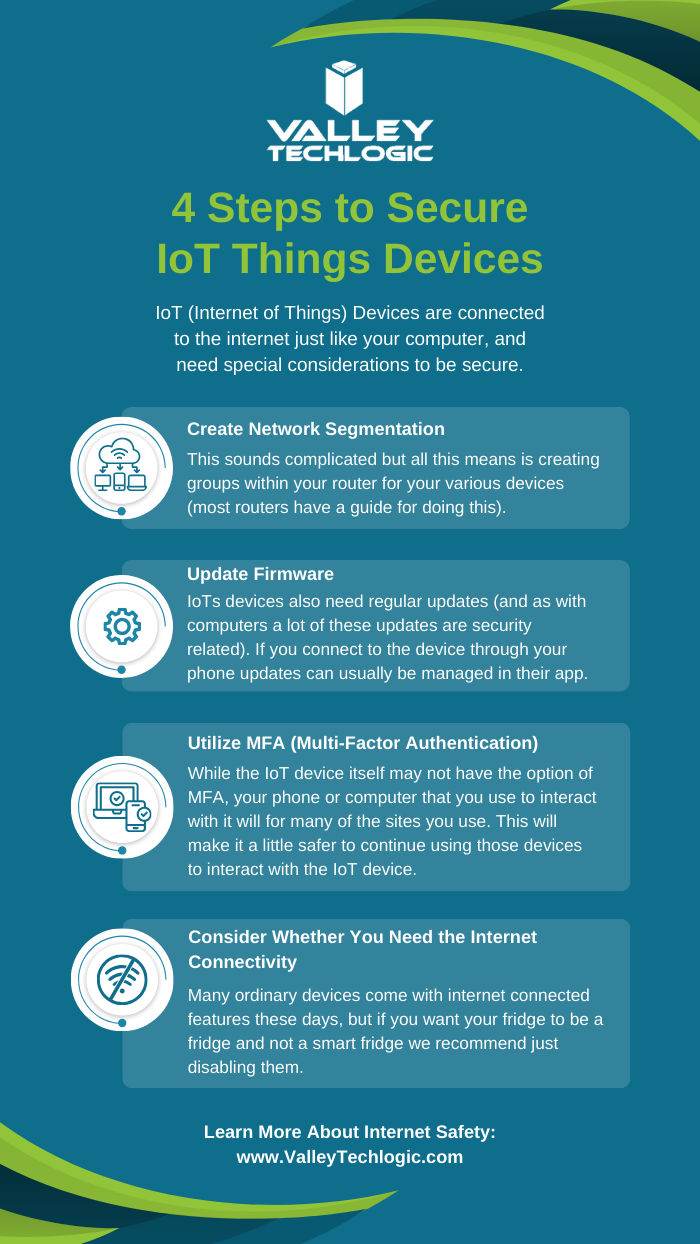
    1. Create Network Segmentation: This sounds complicated, but all this just means creating groups within your router for your various devices (most routers have a guide for doing this).
    2. Update Firmware: IoTs devices also need regular updates (and as with computers a lot of these updates are security related). If you connect to the device through your phone updates can usually be managed in their app.
    3. Utilize MFA (Multi-Factor Authentication): While the IoT device itself may not have the option of MFA, your phone or computer that you use to interact with it will for many of the sites you use. This will make it a little safer to continue using those devices to interact with the IoT device.
    4. Consider Whether You Need the Internet Connectivity: Many ordinary devices come with internet connected features these days, but if you want your fridge to be a fridge and not a smart fridge we recommend just disabling them.

    Even in offices, smart devices are becoming a more common place in the form of lighting, thermostats and sensors. Securing these devices in an office setting is even more important and you may need expert help in making sure all IoTs devices are accounted for and secured properly.

    Valley Techlogic can assist in your networking and cybersecurity goals, learn more with a consultation today.

    Looking for more to read? We suggest these other articles from our site.

    This article was powered by Valley Techlogic, leading provider of trouble free IT services for businesses in California including Merced, Fresno, Stockton & More. You can find more information at https://www.valleytechlogic.com/ or on Facebook at https://www.facebook.com/valleytechlogic/ . Follow us on Twitter at https://x.com/valleytechlogic and LinkedIn at https://www.linkedin.com/company/valley-techlogic-inc/.
  • Toothbrush or threat vector? Turns out it was both for 3 million smart toothbrushes utilized in a recent DDoS attack

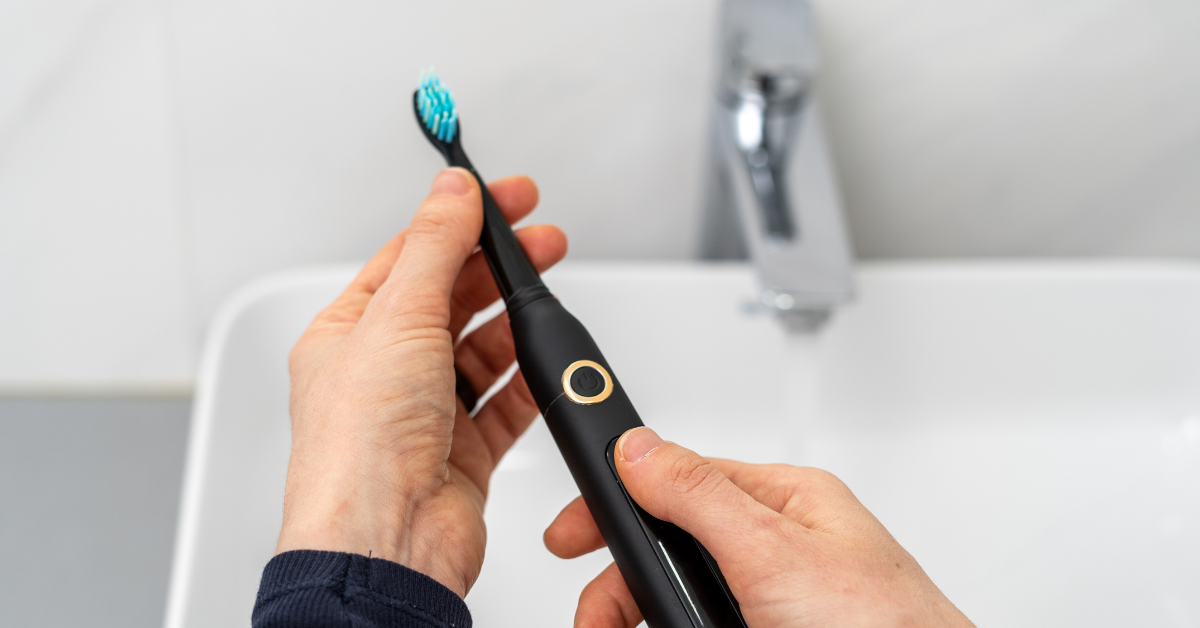
    Toothbrush or threat vector? Turns out it was both for 3 million smart toothbrushes utilized in a recent DDoS attack

    When it comes to cyber attacks it seems like anything can be utilized (see Amazon Fire Stick on the recent attack on Rockstar Games) but even our toothbrushes?

    It’s true, while details are still coming out it’s been reported that 3 million malware infected toothbrushes were used to bring down a Swiss company’s website at the cost of millions of Euros.

    No details have emerged yet on either the brand of toothbrush or the specific company that was targeted but we know the toothbrushes were running on Java which is a popular operating system for IoTs (Internet of Things) devices.

    It highlights the point that any device connected to the internet can be used for malicious intent. We’ve all probably heard about threat actors utilizing home security cameras or baby monitors to gain unwanted access to our homes or to just be creeps. Or how about the study on smart fridges that found out they were collecting a lot of your data unknowingly.

    With so many of us having smart devices scattered throughout our homes it’s long overdue that we think about what security needs to be in place to prevent these devices from being a danger to us or others. That includes both the obvious devices like our computers and the less obvious devices like our internet connected home gadgets.

    In a recent study by the SANS Internet Storm Center they tested how long it would take for an unprotected, unpatched PC to become infected with malware when exposed to the internet. Their calculations came back that it would only take 20 minutes on average for that PC to be infected, this is down from 40 minutes back in 2003.

    Even if you consider yourself tech savvy and “careful”, attackers are relentless when it comes to looking for the latest exploits and staying ahead of the curve. It’s the unfortunate truth that they can put more time into their nefarious activities than you as a business owner can dedicate to outsmarting them.

    For them it’s a numbers game and the more nets they cast and the more avenues they look for to gain access the more likely they are to be successful, and even items such as a toothbrush are not safe.

    That is, unless you follow these steps when securing your network and IoT devices.

    On top of these simple steps to secure your network and maintain your devices, you can also work with a provider like Valley Techlogic.

    We utilize best in class tools that prevent cyber attacks from occurring in the first place. Our partners have the resources to stay on top of and mitigate threats (even zero-day attacks) and with ongoing maintenance included in our service plans we can prevent your devices from becoming a threat vector to you or to another business.

    Schedule a meeting with us today to learn more.

    Looking for more to read? We suggest these other articles from our site.

    This article was powered by Valley Techlogic, an IT service provider in Atwater, CA. You can find more information at https://www.valleytechlogic.com/ or on Facebook at https://www.facebook.com/valleytechlogic/ . Follow us on Twitter at https://x.com/valleytechlogic.