Over the past decade, businesses and consumers alike have come to expect a familiar pattern with technology: devices get faster, storage gets cheaper, and performance improvements come without major cost increases. That pattern is about to break.
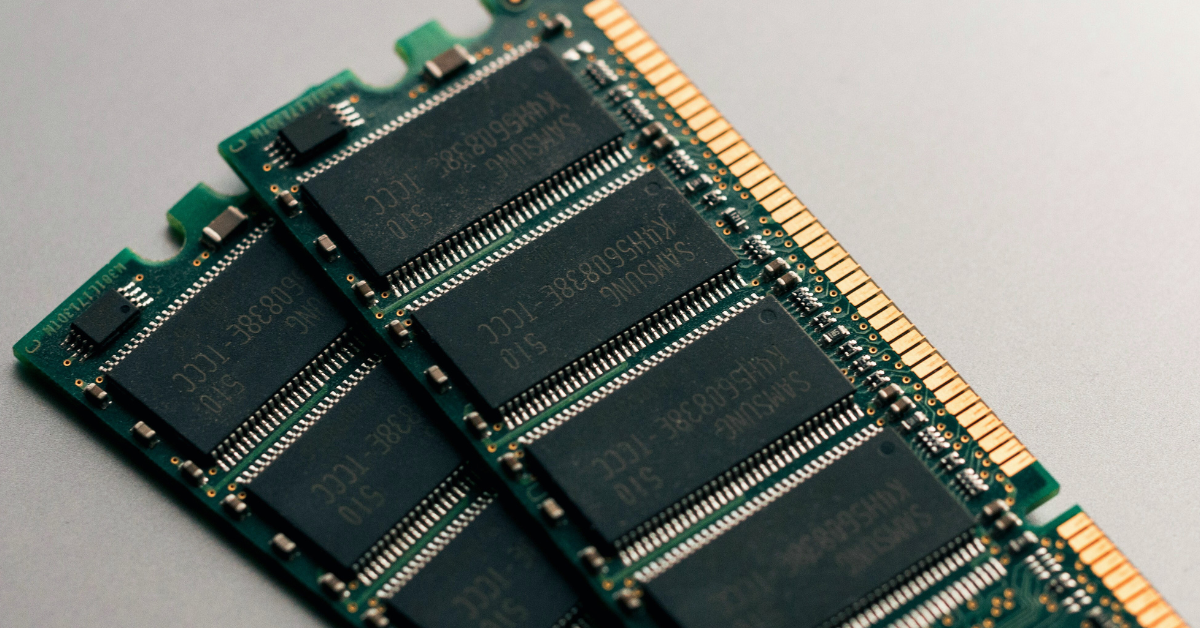
As we head into 2026, memory pricing – specifically RAM – is climbing again, and this time the increase is likely to stick. That shift will affect everything from business laptops and desktops to servers, networking gear, and even phones and tablets. For organizations planning hardware refreshes or long-term IT budgets, this is a change worth understanding now rather than reacting to later.
RAM pricing has always been cyclical, but several forces are converging to push costs upward at the same time.
First, memory manufacturers are deliberately reducing production. After years of oversupply and razor-thin margins, major DRAM vendors have scaled back capacity to stabilize profits. Less supply, even in a steady market, raises prices. Second, demand is increasing in ways that are difficult to reverse. AI workloads, local machine-learning inference, modern operating systems, and security tooling all require more memory than their predecessors. What felt “high-end” in 2020 is now baseline.
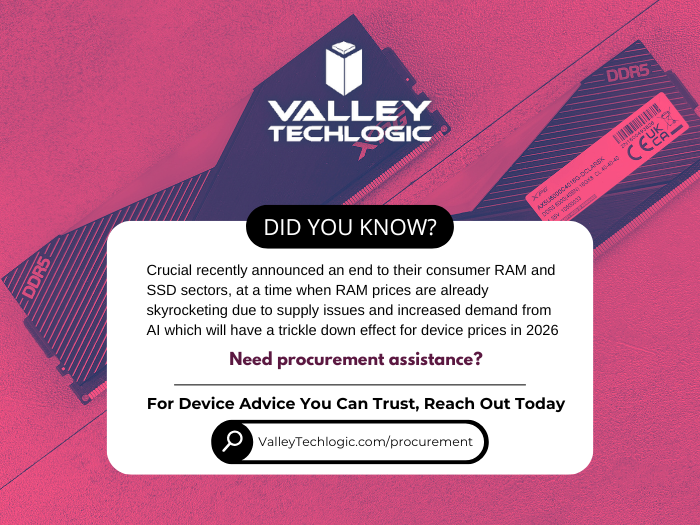
Finally, the industry is in the middle of another transition. DDR5 is replacing DDR4 across laptops, desktops, and servers. New memory standards always cost more early in their lifecycle, and manufacturers are already beginning to sunset older, cheaper options. We also are seeing some vendors pulling out of the consumer space altogether, with Crucial announcing it will no longer sell RAM to consumers or for consumer devices by February 2026.
What This Means for Laptops and End-User Devices
For laptops and desktops, RAM costs don’t just affect performance – they affect purchasing decisions.
In recent years, it was common to see business laptops ship with 8 GB of RAM at entry-level pricing, with 16 GB as a modest upgrade. In 2026, that pricing gap is expected to widen. Vendors are already signaling higher premiums for memory upgrades, especially on models where RAM is soldered and cannot be expanded later.
This also means devices may stay in service longer, not because they age better, but because replacing them becomes more expensive. That has ripple effects for security, performance, and user satisfaction.
Rising RAM costs won’t stop at laptops. They will show up across nearly every category of modern hardware:
- Higher base prices for laptops, desktops, and workstations
- Larger premiums for factory memory upgrades on OEM devices
- Increased server and virtualization host costs, especially for high-density RAM configurations
- More expensive networking and security appliances that rely on embedded memory
- Reduced flexibility in cloud and on-prem capacity planning as memory becomes the limiting factor
This is the one area where “just add more RAM later” is becoming less reliable, particularly as more manufacturers move to non-upgradeable designs.
So, what should your business do now?The key takeaway isn’t panic, it’s planning. Organizations that wait until hardware fails or users complain will feel these increases the most. Those that plan ahead can blunt the impact significantly. That means reassessing minimum RAM standards, extending device lifecycles intentionally instead of reactively, and avoiding under-spec’d systems that will need replacement sooner than expected.
It also means budgeting differently. Hardware refresh cycles in 2026 and beyond may cost more even if device counts stay the same. Treating RAM as a strategic resource rather than an afterthought will matter more than it has in years. At Valley Techlogic, we’re already advising clients to think one refresh cycle ahead. The days of “good enough” memory configurations are ending, and the cost of correcting that mistake later is rising. Smart IT planning isn’t about chasing the newest hardware, it’s about buying the right hardware at the right time. As RAM pricing tightens in 2026, that mindset will separate organizations that adapt smoothly from those that scramble.
If you’re planning a laptop refresh, infrastructure upgrade, or long-term IT budget, now is the time to have that conversation. Book a consultation with us today.
- How Businesses Can Protect Their Data Privacy While Utilizing AI Tools
- Planning a tech refresh ahead of the Windows 10 support ending? Here are our six best strategies
- What is a reply all “email storm” and how can you prevent it?
- 5 Smart Data Retention Policies and 3 Data Saving Pitfalls Costing Your Business Money
- McDonald’s AI “McHire” platform was breached, allowing for the potential exposure of 64 million applicants private data
This article was powered by Valley Techlogic, leading provider of trouble free IT services for businesses in California including Merced, Fresno, Stockton & More. You can find more information at https://www.valleytechlogic.com/ or on Facebook at https://www.facebook.com/valleytechlogic/ . Follow us on X at https://x.com/valleytechlogic and LinkedIn at https://www.linkedin.com/company/valley-techlogic-inc/.