
Tag: windows server

  • Windows Server 2012 R2 End of Life is just a couple months away, are you ready?

    Windows Server 2012 R2 End of Life is just a couple months away, are you ready?

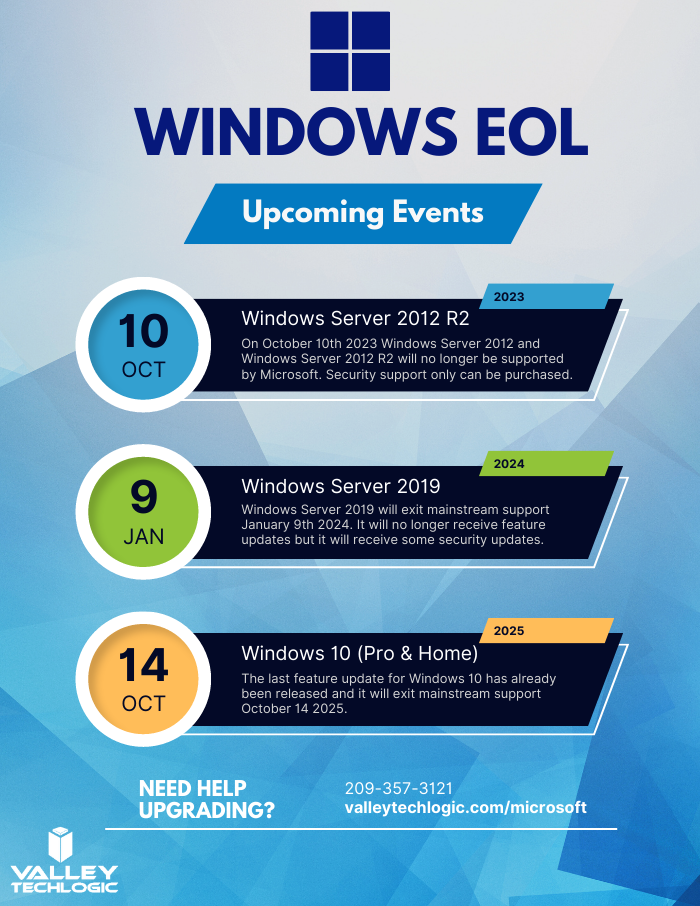
    Windows Server 2012 and Windows Server 2012 R2 are quickly approaching their End-of-Life date of October 10, 2023. This is just over 2 short months away and in the world of data migration (especially as it relates to servers) that doesn’t give you a lot of time if you’re still using this operating system in your business.

    If you’re not in the loop you may be wondering what the big deal is with letting it lapse, it’ll still work right? Well yes and no. The timing of this End-of-Life event coincides with when Microsoft usually does their biggest feature and security updates for the year (typically October).

    This means that those still using Windows Server 2012 will miss out on these updates, and all future updates to come unless you sign up for extended support (at a cost) and even then, that will only provide you with some security updates, there will be no future feature updates for Windows Server 2012.

    You may be on the fence because you aren’t sure if you want to continue using an on-premises server or make the move to the cloud. We actually wrote a detailed article on this topic before and how it relates to the pros and cons of moving to the cloud or remaining with an on-premises server. You can find that article here.

    If you are planning on trying to upgrade soon, we have a couple of steps we can recommend as you prepare:

    1. Decide which operating system you’ll be upgrading to. Typically we recommend upgrading to the most current operating system to give you the longest span of time before an upgrade will be needed again, however depending on your hardware or even specific software you use in your business this may not be feasible. We suggest having your server evaluated to determine which upgrade makes sense (or if an upgrade is even possible.
    2. If you discover your server can’t be upgraded, you’ll need to make plans for a new system. If you have an older server (over 5 years) you’ll need to determine whether an upgrade to the most recent version of Windows Server is even possible. If it’s not, you’ll have to pivot to purchasing a new system instead. There are many benefits to upgrading to a new server and an IT provider like us can help you narrow down your choices based on your business’s needs.
    3. Decide whether a clean installation is possible. If most of the data on your server is backed up elsewhere, for example if you have duplicate copies of your data in the cloud (which we highly recommend) then you can do a clean install without having to worry about the data already on the device.
    4. If a clean installation is not possible, you will need to do a migration. A migration is a slower process of updating your server to the latest version. If you’ve ever upgraded the operating system on your computer, you can probably relate as it’s similar just much longer and with more potential pitfalls. We only recommend a migration be attempted by a qualified IT technician.
    5. Plan for the future now. Scrambling to figure out what to do when an End-of-Life event for your device is coming up is stressful and fortunately, avoidable. Modern versions of Windows Server can perform what’s called an “In-place upgrade” which means an upgrade can occur with very little downtime or stress. Staying on top of your Microsoft and Windows updates and upgrades will mean you have the most secure version of their systems available and much less chance of a catastrophic failure occurring on your devices.

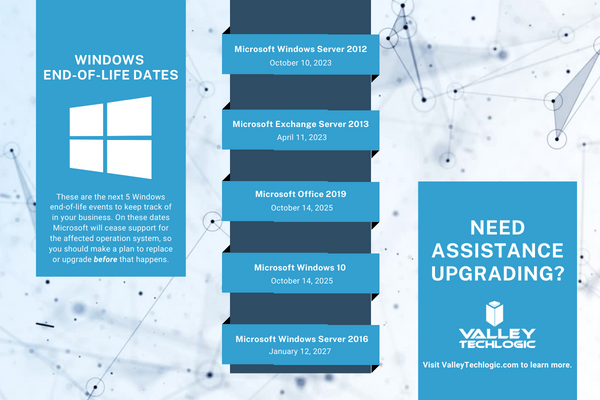
    To help with your planning for Microsoft’s upcoming End-of-Life events, we’ve created this chart with the latest dates to keep track of.
    If you need assistance with upgrading your Windows Server 2012 or Windows Server 2012 R2 device, or have questions about Microsoft products in general, Valley Techlogic can help. We are long time Microsoft partners, and our technicians have a wealth of experience in supporting Windows devices and navigating Microsofts offerings. Schedule an appointment today to learn more.

    Looking for more to read? We suggest these other articles from our site.

    This article was powered by Valley Techlogic, an IT service provider in Atwater, CA. You can find more information at https://www.valleytechlogic.com/ or on Facebook at https://www.facebook.com/valleytechlogic/ . Follow us on Twitter at https://x.com/valleytechlogic.
  • Refurbished versus new, what are your options when it comes to on-premises servers?

    Refurbished versus new, what are your options when it comes to on-premises servers?

    There’s no debate, when it comes to buying an on-premises server for your office it’s a big decision where cost is absolutely a major factor. The word “refurbished” sometimes causes our clients to recoil, we’ve all had bad experiences purchasing refurbished electronics that were DOA (dead on arrival) or perhaps were cosmetically or functionally dubious.

    With servers it’s a little different. Typically, what we see from servers is that one was sent back to the retailer very early on into its life span. Sometimes it’s because the configuration just wasn’t right for the purchaser or because they come from a sector that has very rigorous standards for server replacement (some sectors look to replace servers every 3 years). These servers will still have a lot of life left in them and the big server manufacturers (Dell, IBM, HP etc) will reset them, add some new components, and bring them back up to practically like new conditions.

    If you have a very specific goal in mind for your on-premises server and know you need the latest and greatest hardware components to meet that goal, then we definitely recommend purchasing new. If your goal is to replace an existing aging server or your needs for capacity are more minimal, refurbished is a great option.

    Here are three pluses when buying a new server.

    1. Warranty – New servers will have the longest warranty available; we typically see 5 years being the standard.
    2. Customizable – When you buy a new server you get to customize the hardware and storage, with a refurbished server you’re purchasing what the manufacturer has available.
    3. Modern Features – A new server will have all the latest features, have the highest performance, and be compatible with modern software.

    There also pluses when considering refurbished:

    1. Cost Saving – Of course, the first plus is the cost saving benefits. We often find a refurbished server is substantially less than a new server. You could save as much as 80% compared to buying a new server.
    2. Still Effective – A refurbished server will still be almost as effective as a new server, and for many of our clients there is no noticeable difference between new and refurbished for their use case.
    3. Still Includes a Warranty – While it won’t come with a manufacturer’s warranty, Valley Techlogic offers a 1-year warranty for clients who purchase a refurbished server through us.

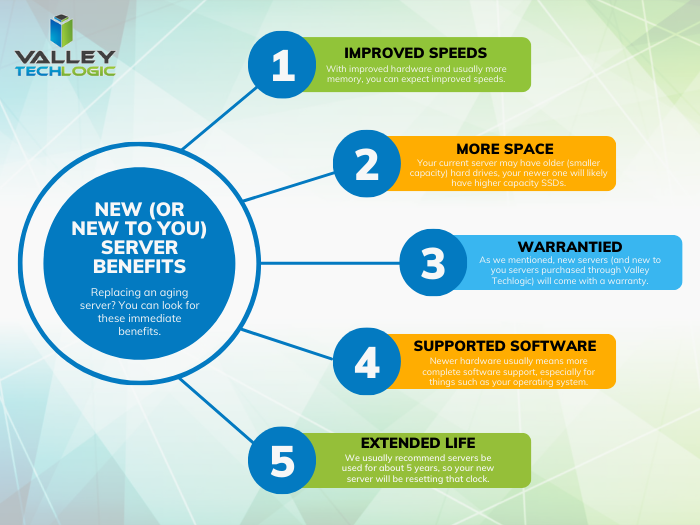
    Of course, there are things to consider when doing a server upgrade in general. Here is a chart with the benefits you will receive when replacing an aging on-premises server:

    Another thing to consider is if your current server is compatible with your existing line of office software a refurbished server may be more compatible, sometimes being on the bleeding edge of technology can have its downsides especially when it comes to legacy software.

    You also want to keep in mind that lead times will vary as well, refurbished servers are often more available while a server customized for your business could take longer to get. If your current server is on it’s last leg or has even died, refurbished may not be your best option but your only option.

    There are a lot of things to consider when it comes to buying a server, and Valley Techlogic can help. We not only offer in-house procurement services we also can do an assessment of your specific situation and offer the best buying advice for your business. Reach out today to learn more.

    Looking for more to read? We suggest these other articles from our site.

    This article was powered by Valley Techlogic, an IT service provider in Atwater, CA. You can find more information at https://www.valleytechlogic.com/ or on Facebook at https://www.facebook.com/valleytechlogic/ . Follow us on Twitter at https://x.com/valleytechlogic.

  • With Windows 11 out now, how many people are still using Windows 7?

    With Windows 11 out now, how many people are still using Windows 7?

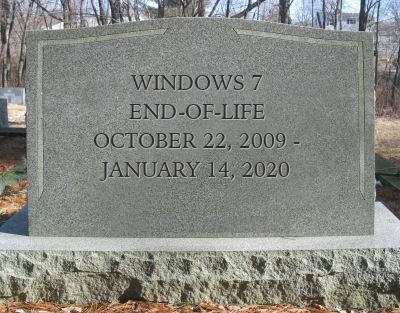
    Windows 11 arrived this year to a somewhat muted response that mostly can be attributed to a tempered rollout – many machines that would have been eligible for a Windows software upgrade in the past were deemed not eligible for the enhanced requirements found in Windows 11. The end-of-life date for Windows 10 is still a way off (October 14, 2025) but a surprising number of people are still using Windows 7 which had it’s end of life event over two years ago now, on January 14th, 2020.

    Microsoft 7 EOL Tombstone

    However, according to GlobalStats Windows 7 still has an almost 12% operating market share. While many of those are probably unused machines that still equates to a large percentage of Windows 7 users over 2 years past it’s end of life date.

    When an operating system is discontinued by Microsoft that means they stop providing support and updates for it, including security updates that protect users from ongoing threats. Even the FBI has strongly warned against continuing to use Windows 7 as it can make you an easy target for cybercrime.

    It can be challenging to move away from a system you know well and at this point upgrading probably means also purchasing new hardware, which during the microchip shortages exacerbated by the pandemic could be no small task (or expense). However, there are deals to be had on hardware now in 2022.

    It can be also difficult to find software that’s supported on an older operating system as updates are made to make them compatible with the latest generation of operating systems.

    We know that for some of our clients it’s actually the reverse, they’re utilizing a line of business software that no longer is being maintained or updated by the provider, but it still functions for their business. The caveat being they must use it on an older machine that hasn’t been updated.

    There are several inherent risks to this, including the first one being that that machine is an obvious choice as a threat vector for would be bad actors. The tenuous relationship between that software and the hardware that deploys it is also ripe for failure the longer you wait to replace it. Securing older hardware to be able to continue to use a discontinued line of business software will also be a significant challenge as time goes on.

    We’ve touched on comfort and convenience between prime motivation to continue using an unsupported operating system, but there’s also the technology challenge of deploying new hardware and software within your business. A major rollout is best left to the experts who can smoothly retrieve the data from your devices and help you make the transition to newer hardware.

    At Valley Techlogic, we can even help you with procuring that hardware and making the best software choices for your business. This includes servers as well. Here is a list of the next 5 Windows end-of-life dates that you should be keeping an eye out for.

    Microsoft EOL Dates That Are Coming Up

    If for some reason you just can’t part with an outdated operating system at this time, here are three tips that will make it slightly safer until you are able to replace those devices:

    1. Make using an anti-virus and firewall a priority. This won’t offer you complete protection as many threats will seek to undermine the unsecured status of the device, but it’s better than being completely unsecured.
    2. Login to important accounts from another device if possible. We would not suggest logging into sites such as your banking website from a device this far out of date from updates.
    3. Utilize network-based mitigation strategies. This is again not foolproof strategy but separating your Windows 7 or other end-of-life devices from the rest of network will offer a slight buffer in the event the device(s) are compromised.

    Need assistance migrating away from devices that have reached their end-of-life date? Valley Techlogic can help, we’re a certified Microsoft partner and experts in all things Windows. Reach out to us today for a quick consultation to learn more.

    Looking for more to read? We suggest these other articles from our site.

    This article was powered by Valley Techlogic, an IT service provider in Atwater, CA. You can find more information at https://www.valleytechlogic.com/ or on Facebook at https://www.facebook.com/valleytechlogic/ . Follow us on Twitter at https://x.com/valleytechlogic.
  • Bridging the technical gap, how technology can bring your dental practice into the future

    Bridging the technical gap, how technology can bring your dental practice into the future

    Dental practitioners are not technology novices, new technologies emerge all the time that help aid patients in the care of their teeth and in advancing restoration processes to combat the effects of tooth decay (just look at the use of lasers for repairing cavities).

    However, we see all the time that our dental practice owning clients will still be stuck in the past when it comes to the rest of their technology.

    If you’re a dentist, ask yourself if the following is true:

    1. Patient records aren’t as organized as you’d like them to be, you’re either still using the old tried and true (and also slow and cluttered) filing cabinet method, or you made the digital leap but don’t have a system for protecting confidentiality. Did you know dentists can also be subject to HIPAA rules?
    2. You have an office server but it’s ancient, well past the 5-year recommend life span for a server and running a copy of Windows server that’s no longer supported by Microsoft. Anything older than Windows Server 2019 is subject to the downsides of no longer being a supported operating system (including increased cybersecurity risks).
    3. Your own system and/or your employee’s workstations are sluggish, you often hear your office assistants tell patients “Sorry, this system is just so slow!” as they’re trying to check them out after a procedure or cleaning. This is frustrating for your employees, and your patients.

    It doesn’t have to be this way. We know as a dental office owner you’re no stranger to bringing on new technologies that can improve the way you do business. Making investments in the technology you use will make your dental practice more efficient, improve the safety of your clients’ records protecting you from liability, and help you accomplish goals you may have for growing your dental practice.

    Unlike the tools you use to practice your trade, you may be a little unsure where to start. Your clients come to you for your expertise in helping them protect their teeth because you’re a trusted expert. So why wouldn’t you reach out to an expert yourself as you navigate these investments in your business?

    The move from more analogue methods, such as the trusted filing cabinet system, may be intimidating, but think of the time it will save pulling up client records and the space you will reclaim in your office.

    New servers and workstations are large investments, but the downtime that occurs when these methods just fail (and they will) is substantial. Can you afford to be potentially stuck for weeks or even months if your office server that houses everything about your business suddenly goes kaput?

    We don’t want to sound gloom and doom, but help is out there to make informed choices about these issues before they become a problem.

    Valley Techlogic can help your dental practice; we have experience with the intricacies of your business and the concerns dental providers have when addressing these complex topics.

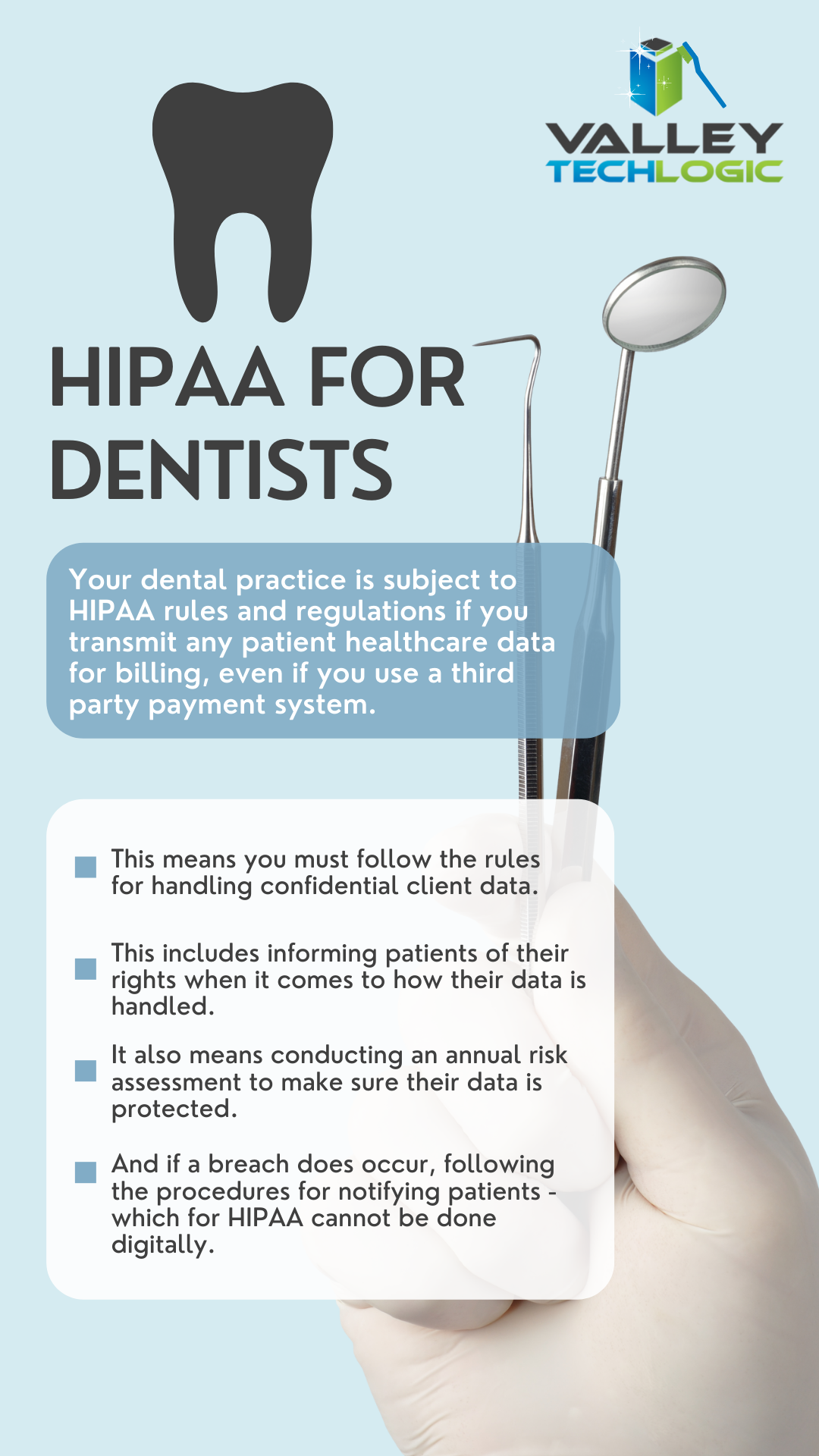
    We can help you bring your business into compliance with HIPAA, so as you grow your business your patients can feel confident their private information is protected at your practice. Below is a chart with some HIPAA rules specifically for dentists:

    Dentist need to follow HIPAA too

    If you’d like to learn more about Valley Techlogic can be a partner in technology for your dental practice, schedule a free consultation today.

    Looking for more to read? We suggest these other articles from our site.

    This article was powered by Valley TechLogic, an IT service provider in Atwater, CA. You can find more information at https://www.valleytechlogic.com/ or on Facebook at https://www.facebook.com/valleytechlogic/ . Follow us on Twitter at https://x.com/valleytechlogic.
  • Why you SHOULD upgrade to Windows 11, but not necessarily Windows Server 2022

    Why you SHOULD upgrade to Windows 11, but not necessarily Windows Server 2022

    It feels like Windows 11 news is everywhere at the moment following the official announcement on June 24th. We covered that announcement in our post found here.

    More details will continue to be released as we move toward the estimated fall release of Windows 11. It’s going to be a free upgrade for Windows 10 users, and we think making the move to Windows 11 will be a smart choice for most customers so long as they’re running newer hardware (which to be fair is a big caveat). We’ll be covering the hardware required for Windows 11 in next weeks post as it’s an ongoing situation.

    In this week’s article we want to cover servers instead, and specifically whether Windows 2022 will be the smart choice for business’s when it’s officially released. It’s been out for preview for Azure Virtual Machines since March of this year, but the commercial release is estimated for later this year. It’s seems it will closely coincide with the estimated release of Windows 11.

    That’s pretty much where the similarities between the two operating systems ends. Servers are a different beast both in their hardware requirements and their intention.

    Many very small businesses get by without a physical server and by just relying on cloud backups for their data. There are some downsides to that, we talk more about moving to the cloud in this article.

    If you already have a server (or even more than one) in place for your business though you may have an understanding of the undertaking that is upgrading your Windows Server version. It’s not quite as cut and dry as it is with upgrading your desktop version of Windows, which is usually just a few clicks of the mouse.

    There are usually vendor considerations in place with a Windows Server upgrade. Some clients even have proprietary software that will not work with an updated version of Windows Server that necessitates having a plan in place to mitigate the issues that come from having an older version, many of those cyber security related.

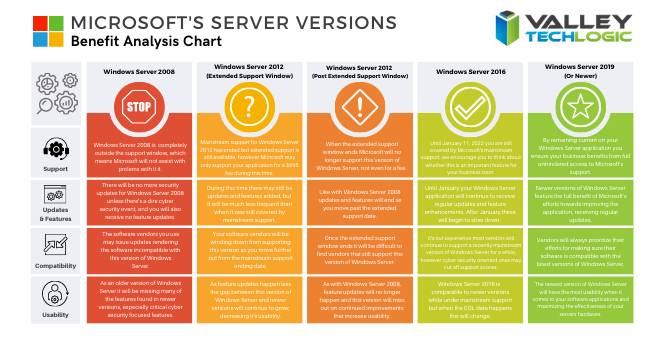
    We’ve made a chart that shows the risk level with various versions of Windows Server as you move out from their End of Life date as well as from their Extended Support date.

    Windows Server Chart Small

    It’s a good idea to keep as current as you can but we don’t necessarily advocate for jumping onto the newest server version immediately. Like we said there are vendor considerations and also the compatibility with software you use in your business, it can take a while for developers to create patches and drivers that make the usability of the newest version of Windows Server the same as what you’re used to.

    Also, like with the desktop version of Windows there are hardware considerations. Upgrading server hardware is always a significant expense for your business and can result in significant downtime. We help our clients mitigate this downtime but it’s still a consideration especially if you’re navigating this topic without a good IT team behind your business.

    We would never discourage anyone from upgrading when the time is right, aging hardware that fails suddenly can also result in significant downtime, much longer than an upgrade would take before you reached that point. We recommend reaching out to an IT professional and having them run diagnostics on your current server as that will help you make an informed choice.

    If you find yourself trying to navigate this topic and other IT service related topics, Valley Techlogic can help. As a Windows partner, we’re well versed in everything Windows and have navigated even the most complicated server setups. Like we mentioned, we even help clients mitigate downtime when it comes to performing necessary upgrades. You can reach us for a consultation here to get started.

    Looking for more to read? We suggest these tech articles from the last week.

    This article was powered by Valley TechLogic, an IT provider in Atwater, CA. You can find more information at https://www.valleytechlogic.com/ or on Facebook at https://www.facebook.com/valleytechlogic/ . Follow us on Twitter at https://x.com/valleytechlogic.

  • Windows 10 End of Life is Coming, and It’s Sooner Than You Think

    Windows 10 End of Life is Coming, and It’s Sooner Than You Think

    While Windows 11 (code name Sun Valley) hasn’t officially been introduced to the public, it’s created enough of a stir that the topic of Windows 10 support ending has been pushed to the forefront of the tech news cycle. Windows 10 will officially end mainstream support on October 14, 2025.

    Back in 2015 it was circled around that Microsoft 10 would be the “last Windows release”, indicating Windows would follow the route of Apple and just continuously update this version in perpetuity. We would have said that was unlikely back then and it seems we would have been right.

    While the comment that initiated that rumor can be tied back to one Microsoft employee, Microsoft didn’t exactly dismiss the notion at the time. They have been moving forward since then into the “as a service” model, especially with their service Microsoft 365 replacing Office 365 as it was known.

    Most of us can remember a time when you paid a one-time fee to use the Office suite of software, but Microsoft has fully moved to a subscription model only under Microsoft 365. “As a service” is basically the de facto model in tech at this point, with Adobe also being another example (remember when you could just buy Photoshop?).

    Businesses like Google always operated under an “as a service” model. So, it makes us question if the roll out of Windows 11 will look the same as past releases.

    Especially for businesses, instead of pricey one-time licensing fees will we be looking at a monthly charge potentially? And how would that work when Windows 11 eventually went end of life?

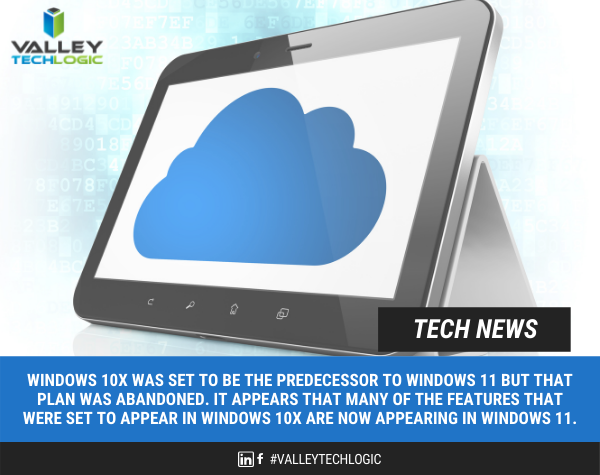
    Tech News #13

    Microsoft has operated under two models for end of life so far, fixed and what they now call the modern lifecycle. Under the fixed lifecycle there weren’t really too many restrictions for support, as long as you kept your version up to date you would receive some level of support for 10 years.

    Now, they operate on a regular update cycle. With a feature update usually arriving in October, a year end update in November and a mid-year update in June or July. While you can expect regular updates between those dates, major feature updates are now condensed.

    Customers are encouraged to perform at least one of these updates a year to stay current. Failing to update with one of these major releases may make your version ineligible for next year’s releases.

    More news about Windows 11 may be arriving next week in an event announced by Microsoft, you can attend the live stream here on June 24th at 11 AM Eastern Time. We’re looking forward to summarizing the details of this event in next weeks blog.

    Beyond Windows 10 for PCs, there will probably be a significant update to Windows Server as well. Server updates tend to happen more often, with Windows Server 2022 following just 3 years after Windows Server 2019 (it’s been in preview since March of this year).

    If your business needs help navigating the ever-changing landscape of Windows or if you’re trying to figure out how to get outdated, unsupported versions back to mainstream support, we’re here for you. Valley Techlogic is a Microsoft Partner and we’re experts when it comes helping businesses manage their Microsoft products, whether it’s Windows or Microsoft 365. Connect with us today to learn more.

    Looking for more to read? We suggest these tech articles from the last week.

    This article was powered by Valley TechLogic, an IT provider in Atwater, CA. You can find more information at https://www.valleytechlogic.com/ or on Facebook at https://www.facebook.com/valleytechlogic/ . Follow us on Twitter at https://x.com/valleytechlogic.