New year, new changes to the AI product approach? We’re just a week into 2026 and already there have already been major changes in the AI space, including product lines diversifying into major categories to aid users more specifically in their querying approach, but first we do want to go off on a small tangent about one approach to AI that’s seeing more traction – self driving cars.
CES 2026 is currently holding their annual mega popular conference in Las Vegas filled to the brim with AI innovation, advancements in robotics, and updates to the consumer technology space just to name a few of their many categories but one thing was clear across the board for car industry specifically – self driving vehicles are still very much on the agenda for 2026.
Uber announced in partnership with EV maker Lucid that robotaxis are currently being tested and that a rollout in San Francisco to start is likely to begin this year (with some vehicles already being road tested there as we speak). These vehicles aim to increase passenger safety with AI updates that include a roof-mounted “halo” that improves sensor visibility, spotting hazardous conditions quickly to avoid crashes. These vehicles will use Uber’s proprietary self-driving technology Nuro, and they say they hope to deploy 20,000 or more self-driving vehicles across major cities over the next six years according to current reporting. Time will tell how they will approach competition from Waymo (owned by the Alphabet Company which also owns Google) who launched the first self-driving taxi service all the way back in 2009 and has become synonymous with the concept.
Next, Google aims to move past just “vibe coding” with a product aimed specifically at full fledged software developers, Google’s coding product labeled “Antigravity” sneakily launched just before Thanksgiving and some senior software engineers are already providing feedback as to how it competes with existing products aimed at coders in the marketplace (such as Cursor which has tie ins to OpenAI, NVidia, Adobe and more). Antigravity separates itself from Google’s flagship AI product Gemini by being solely aimed at coding applications and even allows users to differentiate between frontend, backend and full stack development when prompting.
Users say it still struggles when given incomplete or narrow prompts but when given a senior level prompt the results have risen to the level of even being production ready. Users also mention there’s less instances of it “going off script” as they’ve found with Gemini and other AI tools less singularly focused on coding. As with most AI tools in 2026 time will tell how it increases efficiency and productivity for the userbase.
Finally, OpenAI just announced ChatGPT Health, brushing past earlier inferences that users should NOT use AI for diagnosis (which to be fair is still their stance in a roundabout way). ChatGPT Health will provide supportive, non-diagnostic healthcare advice and is not intended to be a replacement for healthcare services or visiting your doctor. Rather, they say they want to improve patient understanding of medical verbiage and center themselves as a patient “ally”. By their own estimates up to 40 million queries a day are health related, which does signal there is market interest in a product like this but whether it can be used safely and effectively (and can still encourage users to seek out actual medical care when warranted) remains to be seen.
There is already some backlash being received for the product as ChatGPT mentioned it will have the ability to connect to actual healthcare systems and even receive patient records which are ordinary protected by HIPAA but may lose that protection when voluntarily provided by the user to a third-party like ChatGPT. There is no official launch date as of writing, but users can sign up to be part of the demo now.
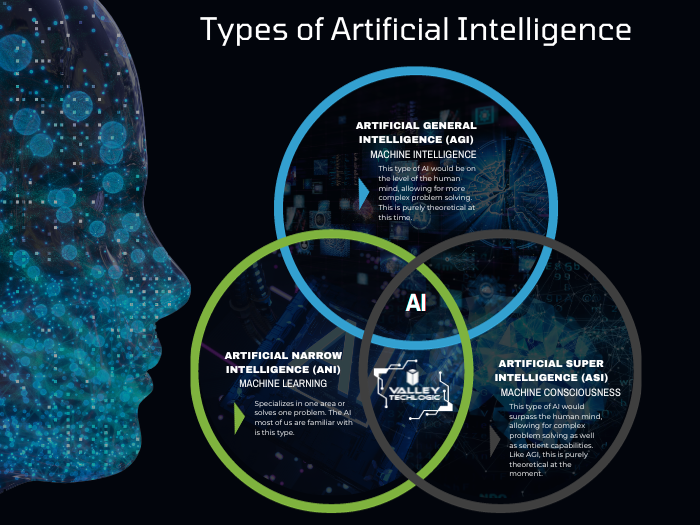
In a nutshell, we’re seeing AI products move away from a catchall basis into more specific categories, perhaps to better answer those specific queries and have less hallucinatory experiences (which is still a major problem in 2026)? Again, time will tell.
As AI becomes more customizable and more powerful in 2026, the real advantage comes from applying it correctly. Valley Techlogic helps businesses design AI solutions around their actual workflows and goals, not generic hype. We continuously invest in emerging technologies so our clients can move forward with confidence. Learn more today with a consultation.
- The Rising Cost of RAM: Why Laptops and Devices Will Get More Expensive in 2026
- How Businesses Can Protect Their Data Privacy While Utilizing AI Tools
- Planning a tech refresh ahead of the Windows 10 support ending? Here are our six best strategies
- What is a reply all “email storm” and how can you prevent it?
- 5 Smart Data Retention Policies and 3 Data Saving Pitfalls Costing Your Business Money
This article was powered by Valley Techlogic, leading provider of trouble free IT services for businesses in California including Merced, Fresno, Stockton & More. You can find more information at https://www.valleytechlogic.com/ or on Facebook at https://www.facebook.com/valleytechlogic/ . Follow us on X at https://x.com/valleytechlogic and LinkedIn at https://www.linkedin.com/company/valley-techlogic-inc/.