Anthropic dropped a surprisingly consequential announcement this week: text generated by supported Claude models will contain an invisible, machine-readable watermark. Not just images, not just obvious AI-generated media, now text itself will be easily identifiable as AI generated. Also, importantly for developers, that even includes text generated through products such as Claude Code.
Predictably, portions of the internet reacted as though Anthropic had announced that every Claude response would arrive with a scarlet letter attached to it. The reality is more complicated, Anthropic is not doing this simply because it woke up one morning and decided people should be able to identify Claude-written emails, blog posts and Python functions. The change is closely tied to the European Union’s AI Act, specifically the transparency requirements that became applicable on August 2, 2026. Those rules require providers of generative AI systems to make artificially generated or manipulated content detectable in a machine-readable form.
Anthropic has signed the EU AI Act’s Article 50 Code of Practice on Transparency of AI-Generated Content and is implementing the marking system as part of that commitment. In other words, this is as much a regulatory story as it is a technology story. So, what is Anthropic actually doing? Anthropic says supported Claude models will use two different mechanisms.
Generated text will contain an “imperceptible watermark” embedded directly into the text itself. Generated files such as PNG, JPG and SVG files can additionally carry signed provenance metadata using C2PA, the Coalition for Content Provenance and Authenticity standard.
The text watermark is the interesting part. Anthropic says it is part of the generated text itself, which means the identifying signal can survive copying and pasting and may survive some subsequent editing. It is also implemented at the model level rather than being something added only by the Claude website.
That means supported models can produce marked output regardless of whether you are accessing them through Claude, the Anthropic API, Claude Code, Claude Cowork, Claude Tag, AWS, Google Cloud or Microsoft Foundry. Anthropic says the system will apply worldwide, not just to customers located inside the European Union. The EU passed the rule, but users everywhere get the implementation.
Anthropic’s current rollout policy is that Claude models launched in the EU on or after August 2, 2026 support machine-readable marking from launch. Models released before August 2 are covered by a transition period, and Anthropic says it is working to add marking support to those older versions as well.
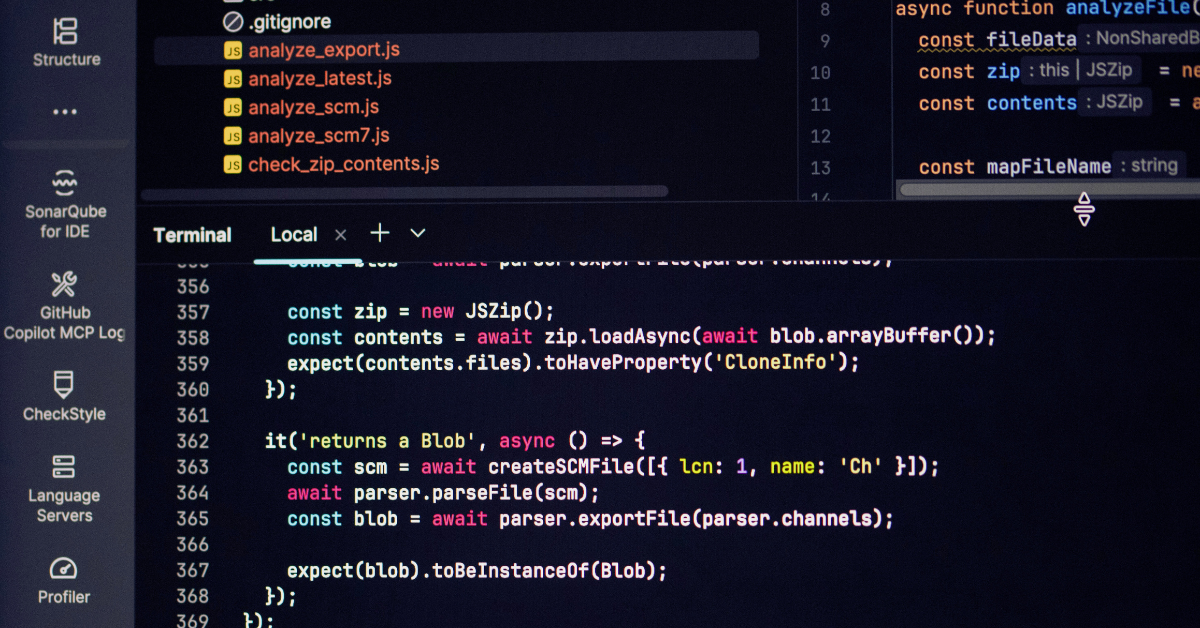
So, if your response to this news is, “I’ll just keep using an older Claude model,” enjoy that workaround while it lasts and yes, this new rule will apply to code. This is actually where the discussion gets considerably more interesting. Claude Code is explicitly included among the products covered by Anthropic’s marking system, and Anthropic says embedded watermarks apply to generated text from supported models. Code, conveniently enough, is also text.
That raises questions that are very different from the familiar debate about students submitting AI-generated essays or people publishing machine-written LinkedIn thought leadership about how drinking coffee taught them seven lessons about enterprise leadership.
Increasingly, developers for example use AI as part of normal software development. Claude might generate an entire function. It might refactor an existing function. It might replace five lines. It might fix a bug. It might add comments. It might translate PowerShell into Python. It might simply suggest a more efficient conditional statement. At what point does Claude-generated code become Claude-processed code?
Anthropic itself acknowledges exactly this problem with text generally. A detected watermark does not prove that Claude originally authored the material. Someone may have written something themselves and then asked Claude to proofread, translate, summarize or transform it.
The resulting output can still carry a Claude watermark. There may not be a distinction between “Claude processed this” and “Claude wrote this”. Some of the objections are predictable from those who already, or aspired, to use AI ubiquitously in their creative process with limited input beyond prompting. Other concerns are simply related to using AI as an assistant with limited input into the creative process (such as grammatical corrections or checking for bugs).
The controversy largely falls into a few categories:
- Authorship. If someone writes a document and uses Claude for editing, the resulting text may still contain the watermark. A detector therefore cannot automatically establish who actually wrote the underlying material.
- Code ownership and copyright. Developers are asking how machine-readable evidence of AI involvement might someday interact with software copyright disputes, licensing, corporate intellectual property policies and provenance requirements.
- Privacy. Some critics dislike the idea that text can carry an invisible indication of having passed through a particular company’s system.
- Detection asymmetry. Anthropic has not yet published complete technical details about the text watermark. The company says it plans to provide detection mechanisms for users and third parties, including a free API for checking Claude watermarks.
That last point has produced a particularly intense reaction. People are understandably uncomfortable with the idea of a vendor invisibly marking their output while being the only party initially capable of reliably identifying that mark. Anthropic appears to recognize the problem. Its documentation says it intends to enable users and third parties to detect the markings themselves and will publish additional technical documentation.
Until that documentation exists, though, there are unanswered technical questions. We do not yet know enough about the implementation to confidently say how resistant the text watermark will be to reformatting, linting, refactoring, partial rewriting, token substitution or other transformations. We do know that the implementation involves pattern matching.
When a human writes it’s naturally random, when AI writes it’s much more predictable. It’s this predictability that will be used as a “watermark”. Where you may not consciously notice for example, that every 5th sentence starts with a word that begins with a capital “T”, AI can. It’s in the pattern matching component that will form digital watermark will form.
Implementation is probably the most important part of the announcement, and one that will inevitably disappear as AI detection products begin adding giant green and red “CLAUDE DETECTED” buttons to their interfaces. Anthropic explicitly warns that its marking system is not conclusive proof of authorship. A positive detection means the content may have been processed by Claude. It does not necessarily mean Claude created the underlying ideas, original language or data. Likewise, failing to detect a watermark does not prove that something was written by a human.
Anthropic lists several reasons a mark might disappear or become undetectable. Text can be heavily edited, paraphrased, translated or mixed with other writing. Very short passages may not contain enough information for a reliable signal. File metadata can disappear during format conversion, screenshots or re-saving. That makes this fundamentally different from a cryptographic certificate saying, “Claude wrote this exact document.”
We are rapidly approaching a world in which enormous amounts of text, software, imagery, music and video are machine generated or machine assisted. Knowing something about where that material came from has value. It could help content platforms distinguish synthetic media. It could give researchers better information about training datasets. It could make certain types of fraud easier to investigate. It could improve provenance tracking inside enterprises that increasingly have humans and AI systems collaboratively producing documents and software.
There is even a longer-term AI problem here. As synthetic content floods the internet, future models risk consuming increasing quantities of previous models’ output during training. Reliable provenance systems could theoretically help developers identify and filter some of that synthetic data. Several technologists have pointed to exactly this potential benefit amid the backlash. The problem is not necessarily that provenance exists, the problem is what people eventually decide provenance means.
There is a danger in bad interpretation, however. We already spent several years watching unreliable “AI detectors” accuse students of cheating because their sentence structure looked statistically suspicious. A genuine provider-generated watermark is much stronger evidence that an AI system touched something, but even Anthropic is explicitly saying that this does not establish authorship. That nuance needs to survive contact with HR departments, universities, automated compliance platforms and procurement policies.
Anthropic will almost certainly not be the last major AI company dealing with this problem. The European Commission says Article 50’s transparency obligations apply from August 2, 2026, and the Code of Practice specifically calls for AI-generated audio, images, video and text to be marked in machine-readable formats using techniques that are effective, interoperable, robust and reliable where technically feasible.
Anthropic is therefore an early and very visible example of a broader shift. The internet spent the first few years of the generative AI boom arguing about whether AI-generated content could be detected. We are now entering the next phase, where regulators are increasingly asking whether AI companies should deliberately make it detectable, those are very different questions.
For developers, writers, businesses and anyone else who routinely uses LLMs as part of their workflow, the most important consequence may not be that Claude is watermarking its output. It may be that AI provenance is about to become a normal part of the creation process. Whether that turns into a genuinely useful transparency mechanism or the world’s largest automated “gotcha” system will depend considerably less on the watermark itself than on what everyone else decides to do with it.
Digital watermark or not, AI is here to stay and we’ve seen our clients implement AI solutions directly into their business with Valley Techlogic’s guidance. How you implement AI is just as important as how you will use it day to day, and questions surrounding data security and privacy, access controls, retention, compliance, and governance should be answered before these tools become embedded in your organization’s workflows. If you would like to learn more about AI readiness and how Valley Techlogic can help your business with its AI strategy, schedule a free consultation today to get started.

- Can Password Managers Be Hacked? Our 3 Best Password Manager Recommendations
- DKIM? DMARC? How to stop scammers from using your company’s domain for nefarious purposes
- How much does it cost to wire a small office? We break it down
- The Pentagon announced an ‘immediate suspension’ of CMMC phase II requirements, what this means and how to proceed
- We all know MFA is important, but many users are expressing symptoms of “MFA fatigue”
This article was powered by Valley Techlogic, leading provider of trouble free IT services for businesses in California including Merced, Fresno, Stockton & More. You can find more information at https://www.valleytechlogic.com/ or on Facebook at https://www.facebook.com/valleytechlogic/ . Follow us on X at https://x.com/valleytechlogic