Tag: phishing attacks

  • 2.5 Billion Gmail users at risk after database leak exposes pertinent account information

    2.5 Billion Gmail users at risk after database leak exposes pertinent account information

    It was recently revealed that Google’s Salesforce database was breached, exposing data for over 2.5 billion users at the time of reporting.

    Initially it was being reported that the leak would primarily effect only their business users as the data found in Salesforce mostly pertains to those accounts. However that was quickly dispelled as Gmail users reported increased attacks against their accounts, with some users reporting they even received a call from alleged Google employees notifying them of the breach of their account.

    We want to make it clear that no password data was leaked in this data breach (at least at the time of writing) instead the data is being used to increase the effectiveness of phishing attacks leveled at Gmail users. One example of the attacks that are occurring includes users being told to initiate an account reset wherein the bad actor intercepts the password and locks the original user out.

    Another attack being initiated is what Google calls “dangling bucket takeover” where the attacker essentially has access to a link connected to the users Google storage and uses it to hijack their account. Google outlines the four ways you can protect against this kind of attack in the page linked.

    While company based accounts might be the most prime targets – and this goes for phishing in general – that doesn’t mean individual users are safe. Spear phishing, a popular variant of phishing that involves researching and gaining access to user accounts outside of their prime target such as an employees close to the company lead, could be a motivator for the current rise in attacks related to this breach. They would then use those accounts to increase the legitimacy of phishing attempts leveled at the primary target (by sending messages as the compromised user).

    It is paramount in 2025 that users practice good safety hygiene when it comes to their online data, especially in an age where the onslaught of data breach news can feel overwhelming and increase a sense of helplessness. Even though data breaches are not rare, users can still protect themselves in the following ways:

    1. Enable Two-Factor Authentication (2FA)
    • Turn on Google 2-Step Verification.
    • Use an authenticator app (Google Authenticator, Authy, or similar) instead of SMS, since text messages can be intercepted.
    • For even stronger protection, consider a hardware security key (e.g., YubiKey).
    1. Use a Strong, Unique Password
    • Avoid reusing passwords across multiple sites.
    • Use a password manager (Bitwarden, 1Password, LastPass, etc.) to generate and store long, random passwords.
    • Change your password immediately if you suspect any compromise.
    1. Regularly Review Account Activity
    • Check Gmail’s “Last account activity” (bottom right of inbox) for unusual logins.
    • Review the Google Account Security page to see devices that have accessed your account.
    • Remove old or unused devices and apps with account access.
    1. Be Proactive Against Phishing
    • Always verify the sender’s address before clicking links.
    • Hover over links to confirm they point to legitimate Google domains.
    • Turn on Gmail’s Enhanced Safe Browsing in account security settings for extra phishing protection.

    Email remains the number one entry point for cyberattacks, from phishing scams to ransomware. At Valley Techlogic, we take a proactive approach to keeping your inbox safe. Our team helps businesses implement advanced spam filtering, real-time threat detection, and encryption to safeguard sensitive communications.

    Beyond just tools, we provide continuous monitoring, security awareness training, and rapid response in the event of a breach. With Valley Techlogic as your partner, you can rest easy knowing your organization’s most critical communication channel is protected. Learn more today with a consultation.

    Looking for more to read? We suggest these other articles from our site.

    This article was powered by Valley Techlogic, leading provider of trouble free IT services for businesses in California including Merced, Fresno, Stockton & More. You can find more information at https://www.valleytechlogic.com/ or on Facebook at https://www.facebook.com/valleytechlogic/ . Follow us on X at https://x.com/valleytechlogic and LinkedIn at https://www.linkedin.com/company/valley-techlogic-inc/.

  • ChatGPT is allowing even novice wannabe hackers to construct their own malware

    ChatGPT is allowing even novice wannabe hackers to construct their own malware

    ChatGPT is a power AI chatbot that allows the user to communicate a question to it and receive a very thorough answer on any topic the user can dream up. Created by OpenAI and already fielding massive investment offers even from companies like Microsoft, they’ve had a ton of buzz in the news both positive and negative.

    It first came under scrutiny when it became apparent the tool was great for generating lots of content quickly, including articles that students could use and submit (though the quality of these articles can vary greatly).

    This is because tools like ChatGPT scrub great swaths of the internet for their content. Whether it’s being asked to write a paper on the Civil War or generate a Picasso-esque picture, it takes the prompt and quickly compiles the database of knowledge it has built up from data readily available online and provides the user with what they’ve asked for.

    There has been a lot of discussion around the future of AI and the ramifications of copyright, particularly when it comes to original written works or art, but today we’d like to focus on ChatGPT’s scripting capabilities and the potential pros and cons.

    As leaders in the IT space we were already aware of the buzz around ChatGPT’s scripting capabilities, with some programmers praising it’s ability to create simple scripts and the potential it had to make aspects of their jobs easier. While others lamented what it meant for the programming role as a whole or whether the code output was really “up to snuff” especially when used in real world applications.

    It’s become clear there’s a niche for ChatGPT in creating low level tools, but this unfortunately also includes malware and encryption scripts – which often aren’t very complicated and easily deployed via phishing type scams.

    As reported by Axios, there is already evidence that hackers are using ChatGPT in the creation of malware or in improving their existing attempts to create new malware scripts. There is also evidence that it’s being used by less technically inclined people to create malware they otherwise would not be able to make.

    OpenAI has made statements that they are looking to improve their product and prevent it from being abused, in the interim we would advise users to be especially cautious when clicking on links or downloading files. We wrote an article on how to spot phishing clues online that might be worth a review.

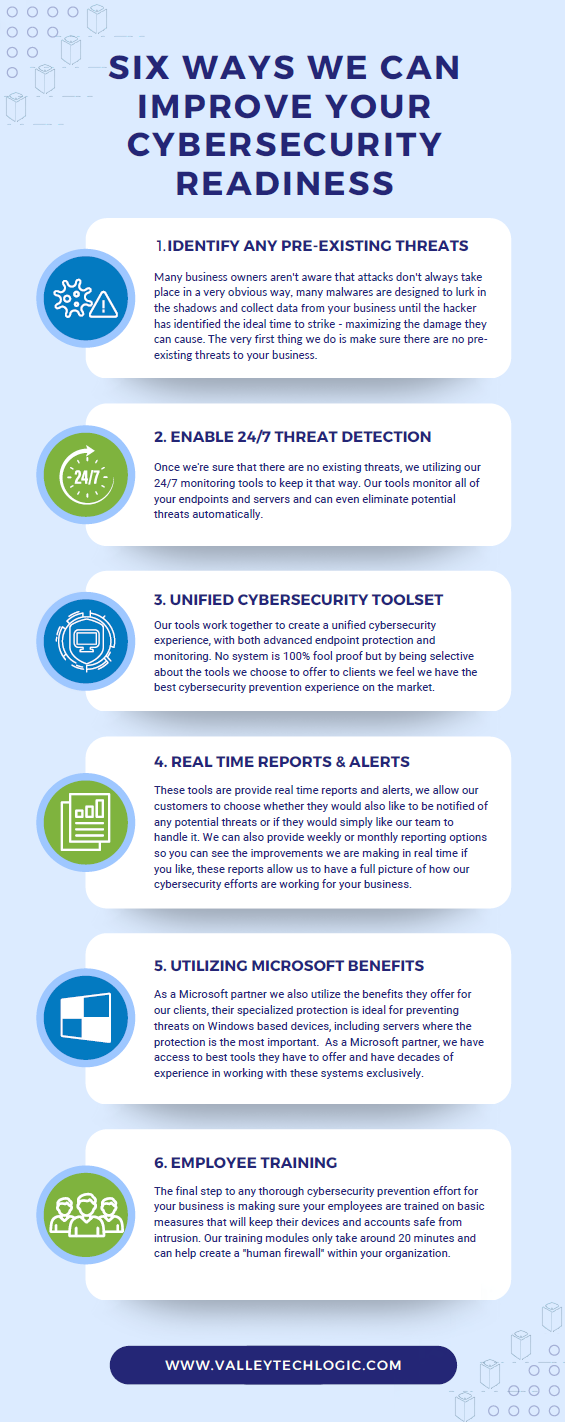
    For businesses who have made getting serious about cybersecurity a primary goal in 2023, here are 6 ways Valley Techlogic can help.

    Click to grab the full size version.

    Looking to learn more? Schedule a quick consultation with us today or take advantage of our 2-hour free service offer to experience our commitment to quality service for yourself.

    Looking for more to read? We suggest these other articles from our site.

    This article was powered by Valley Techlogic, an IT service provider in Atwater, CA. You can find more information at https://www.valleytechlogic.com/ or on Facebook at https://www.facebook.com/valleytechlogic/ . Follow us on Twitter at https://x.com/valleytechlogic.

  • More data breach woes for LastPass and our recommendations for you on how to deal with it

    More data breach woes for LastPass and our recommendations for you on how to deal with it

    We’ve posted about LastPass data breaches before but at that time it was purported to be a false alarm according to the company, the news on this most recent breach is that it’s real and that LastPass users should be concerned.

    The data breach in question happened in August but LastPass is just now revealing the details on what was stolen and the scope of breach. At the time of the hack LastPass was again saying that it was a false alarm but that wasn’t true and “backup customer vault data” was accessed during the August incident.

    This backup vault data included both unencrypted data such as website URLs and encrypted data such as website usernames and passwords. Having both details will allow hackers to easily put two and two together to access customer accounts.

    With that said because the data for usernames and passwords is still encrypted LastPass has let customers know their data is still safe, as they say it can only be unencrypted with their unique encryption key that is derived from your master password. User master passwords are not accessible due to their “Zero Knowledge” architecture.

    With this architecture no one, not even LastPass themselves, has access to a user’s master password. LastPass requires that master passwords be 12 characters long so even if the hackers who accessed this data attempt to brute force individual passwords it would still be difficult to impossible, with LastPass themselves estimating it would take “millions of years using generally-available password-cracking technology”.

    LastPass users should still be on the lookout for phishing attempts in the upcoming days however, even if your data is safe bad actors may still use the news of this breach to attempt to trick users into revealing their data. You should never share your password details with anyone, especially your master password. LastPass will never ask you for your password information.

    Also some additional advice for business owners who may own websites from Google, because the URLs in this breach were not encrypted they may include some that you didn’t want publicly accessible. John Mueller a SEO expert at Google recommends reviewing any website URLs you may have that may inadvertently leak data for your business, including customer form data.

    We still believe password managers are a security benefit to both consumers and businesses alike. They’re one small part of increasing overall cybersecurity awareness and safety and fall under the larger spectrum of increasing user education and accountability.

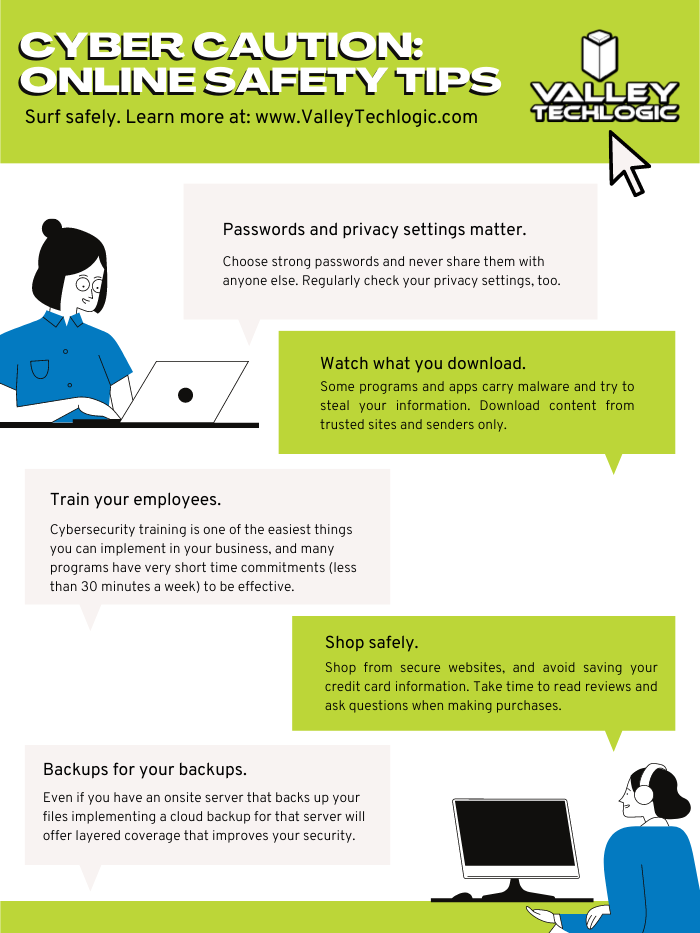
    We’ve posted about proper password safety and advice on avoiding phishing attacks, but here are the top 5 things you can enable in your business today to improve your cybersecurity safety in 2023.

    Internet Safety InfographicIf news of breaches make you nervous and you aren’t sure if your business is prepared from a cybersecurity standpoint, Valley Techlogic can help. We consider ourselves to be a premier provider of cybersecurity services for businesses in our area and beyond. We can help your business by covering your endpoints, setting up secure backups, virus and malware scanning and prevention and more. Schedule a consultation today.

    Looking for more to read? We suggest these other articles from our site.

    This article was powered by Valley Techlogic, an IT service provider in Atwater, CA. You can find more information at https://www.valleytechlogic.com/ or on Facebook at https://www.facebook.com/valleytechlogic/ . Follow us on Twitter at https://x.com/valleytechlogic.