Tag: cybersecurity

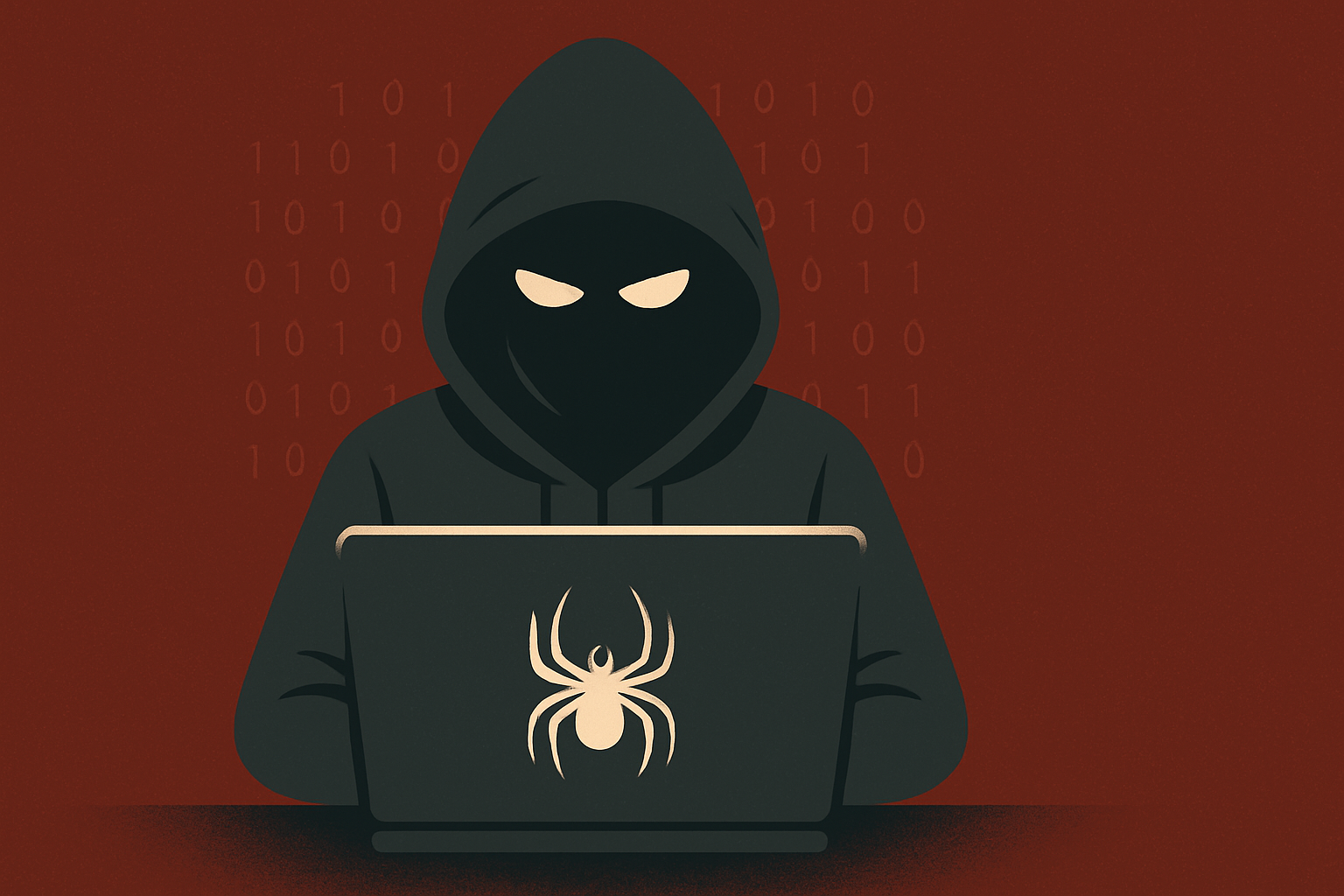
  • Hacking group Scattered Spider is making waves for disrupting retailers and corporate America despite recent arrests

    Hacking group Scattered Spider is making waves for disrupting retailers and corporate America despite recent arrests

    Scattered Spider, otherwise known as UNC3944 gained notoriety during the infamous attack on MGM (which we reported in in 2023) which was estimated to have cost the company around $100 million dollars. The group has kept up its momentum while targeting financial institutions in particular such as PNC Financial Group, Synchrony Financial, Truist Bank and more.

    It’s estimated the cost of cyber crime has risen to $793 billion per month with groups like Scattered Spider contributing to this bottom line. The group has also been in the news for its unusual makeup, with most arrests being teenagers to young adults. This is not the hardened group of long-time professional hackers most people think of when they think of breaches on this scale.

    A set of recent arrests were made of two 19-year-old men, a 17-year-old boy and a 20-year-old woman in the UK, with the bad actors being charged with blackmail, money laundering and ties to a criminal organization as of writing. One of the alleged leaders of the group, 23-year-old Tyler Buchanan, was also arrested in May of this year and has been extradited to California to face charges where he faces up to 47 years behind bars.

    Ransomware/Malware-as-a-service (RAAS/MAAS) becoming more ubiquitous means that someone doesn’t even have to be extremely tech savvy to pull a cyber attack, expanding the reach of bad actors looking for financial gain from attacks on anyone convenient. It has never been more true than it is now in 2025 that no one is safe from cyber threats. Your business Isn’t too small or too remote to be a target.

    The group has also focused on tactics that are more social engineering than directly technical, with phishing being a primary driver as we saw in the MGM attack. Here are 5 ways hacking groups like Scattered Spider are pulling off cyber attacks:

    1. Social Engineering and Impersonation

    Scattered Spider is notorious for tricking employees into giving up credentials. They often:

    • Impersonate IT or help desk personnel
    • Call or message employees to reset passwords or approve MFA prompts
    • Use public info (like LinkedIn profiles) to craft believable stories
    1. SIM Swapping

    They hijack a victim’s mobile number by convincing the phone carrier to transfer it to a SIM card they control. Once they do this, they can:

    • Bypass MFA (multi-factor authentication)
    • Receive SMS-based codes for password resets
    1. Exploiting Identity & Access Management (IAM) Systems

    They target systems like Okta or Microsoft Azure AD to escalate privileges and gain access across an organization. Once inside:

    • They move laterally across systems
    • Create persistent backdoors
    1. Abusing Remote Access Tools

    Scattered Spider leverages legitimate tools like:

    • Remote desktop software
    • VPNs and virtual desktop infrastructure (VDI)
      They often enter using stolen credentials and hide in plain sight by mimicking normal user activity.
    1. Ransomware Deployment & Data Theft

    After gaining sufficient access, they:

    • Exfiltrate sensitive data
    • Deploy ransomware (often in partnership with ransomware-as-a-service groups like ALPHV/BlackCat)
    • Threaten double extortion: demanding payment to both unlock systems and not leak data

    At Valley Techlogic, we help businesses of all sizes stay protected against advanced threats from hacking groups like Scattered Spider by combining proactive cybersecurity strategies with enterprise-grade tools. Our team monitors for suspicious activity, implements strong identity and access controls, and trains your staff to recognize social engineering attempts, closing the gaps these groups exploit. With layered protection and rapid response capabilities, we keep your systems secure and your data safe. Get started with a Valley Techlogic service plan today to protect your business from future threats.
    Looking for more to read? We suggest these other articles from our site.

    This article was powered by Valley Techlogic, leading provider of trouble free IT services for businesses in California including Merced, Fresno, Stockton & More. You can find more information at https://www.valleytechlogic.com/ or on Facebook at https://www.facebook.com/valleytechlogic/ . Follow us on X at https://x.com/valleytechlogic and LinkedIn at https://www.linkedin.com/company/valley-techlogic-inc/.

  • Staying secure on the 4th, why phishing attacks increase during holiday weekends

    Staying secure on the 4th, why phishing attacks increase during holiday weekends

    We’ve touched on this topic before, but we thought a reminder as we approach the Fourth of July weekend couldn’t hurt, hackers don’t take the holidays off.

    This includes summer holidays such as Memorial Day and the 4th of July in addition to the typical winter festivities. Bad actors know that the holidays can be a boon for their nefarious activities, employees may be less on guard as they look forward to the extra time off and routines are thrown off with a disruption to the normal M-F patterned workweek.

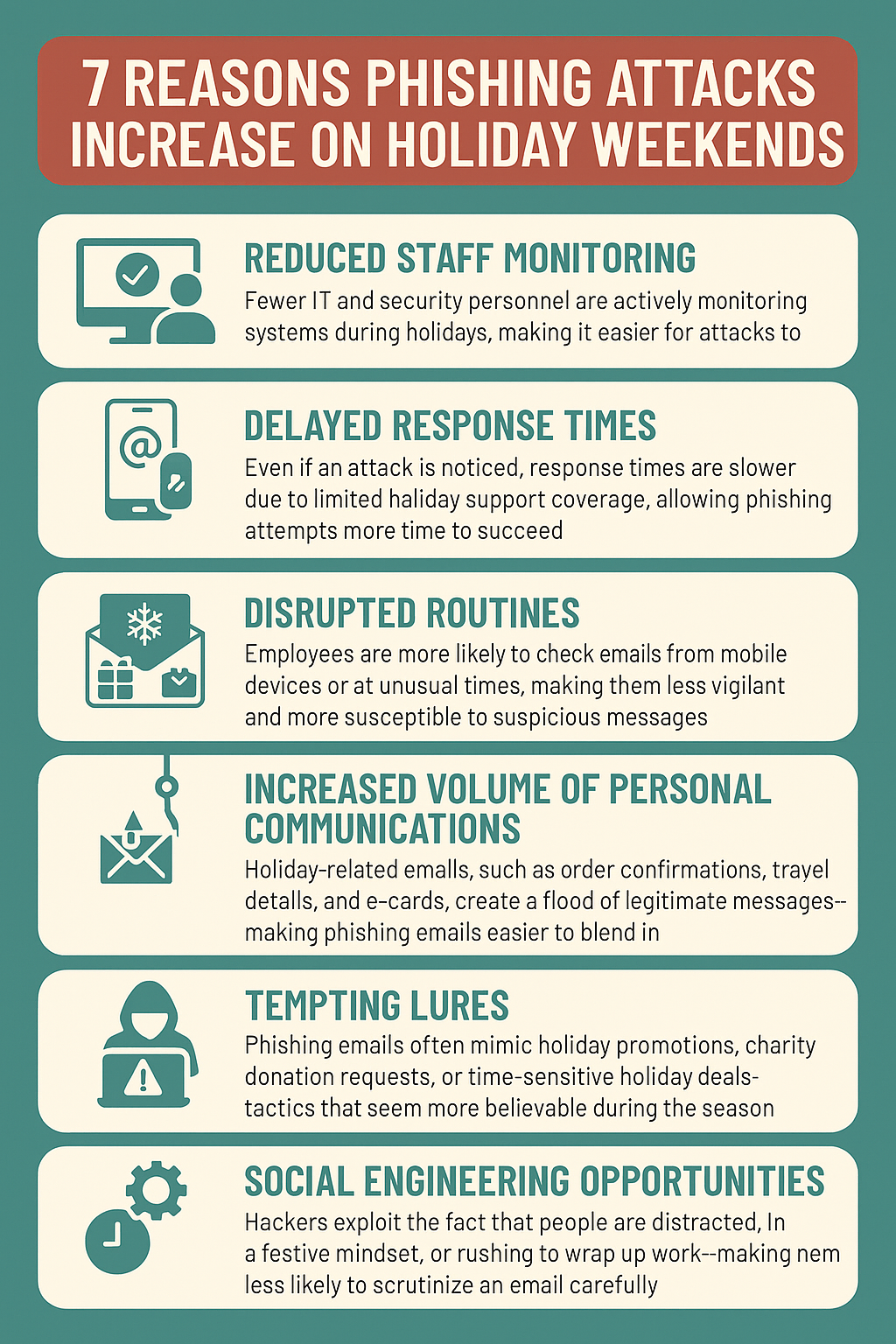
    Here are 7 ways the holidays lead to a higher risk of phishing attacks:

    • Reduced Staff Monitoring
      Fewer IT and security personnel are actively monitoring systems during holidays, making it easier for attacks to go undetected.
    • Delayed Response Times
      Even if an attack is noticed, response times are slower due to limited holiday support coverage, allowing phishing attempts more time to succeed.
    • Disrupted Routines
      Employees are more likely to check emails from mobile devices or at unusual times, making them less vigilant and more susceptible to suspicious messages.
    • Increased Volume of Personal Communications
      Holiday-related emails, such as order confirmations, travel details, and e-cards, create a flood of legitimate messages—making phishing emails easier to blend in.
    • Tempting Lures
      Phishing emails often mimic holiday promotions, charity donation requests, or time-sensitive holiday deals—tactics that seem more believable during the season.
    • Social Engineering Opportunities
      Hackers exploit the fact that people are distracted, in a festive mindset, or rushing to wrap up work—making them less likely to scrutinize an email carefully.
    • Gaps in System Updates
      Routine maintenance and updates might be paused during holidays, leaving systems more vulnerable to phishing-based exploits that rely on unpatched software.

    (Download these tips as an Infographic below.)

    Phishing attacks are one of the most common—and costly—cyber threats facing small businesses today. At Valley Techlogic, we help protect your business by implementing robust email security solutions, conducting employee phishing awareness training, and monitoring for suspicious activity around the clock. Our proactive approach ensures you’re not just reacting to threats but preventing them before they reach your inbox. Reach out today for more information.

    Looking for more to read? We suggest these other articles from our site.

    This article was powered by Valley Techlogic, leading provider of trouble free IT services for businesses in California including Merced, Fresno, Stockton & More. You can find more information at https://www.valleytechlogic.com/ or on Facebook at https://www.facebook.com/valleytechlogic/ . Follow us on X at https://x.com/valleytechlogic and LinkedIn at https://www.linkedin.com/company/valley-techlogic-inc/.

  • We’re halfway through 2025, our top 10 blogs of the year so far

    We’re halfway through 2025, our top 10 blogs of the year so far

    June marks the halfway mark through the year, and what a year it’s been so far – with the innovations in AI to major changes to the global economy via tariffs and more, these are our top 10 blogs of the year so far.

    1. Are you all in on AI or approaching it more moderately? The perils of not strategizing your AI roll out (May 23, 2025)
      Examines the pros and cons of diving straight into AI vs. a cautious approach, highlighting the risks of rolling out AI without a solid business strategy.
      🔗 https://www.valleytechlogic.com/2025/05/are-you-all-in-on-ai-or-approaching-it-more-moderately-the-perils-of-not-strategizing-your-ai-roll-out/
    2. 5 Ways A Managed Service Provider Helps You Predict Future Technology Spending** (May 16, 2025)
      Explores how MSPs help businesses plan proactively by forecasting growth, mapping lifecycles, and avoiding surprise vendor costs.
      🔗 https://www.valleytechlogic.com/2025/05/title-5-ways-a-managed-service-provider-helps-you-predict-future-technology-spending/
    3. Best of Cybersecurity: 5 Must‑Read Blogs to Protect Your Business (May 9, 2025)
      A curated roundup of their top cybersecurity posts, offering actionable advice on phishing, disaster recovery, and more.
      🔗 https://www.valleytechlogic.com/2025/05/best-of-cybersecurity-5-must-read-blogs-to-protect-your-business/
    4. 5 Signs It’s Time to Switch Your IT Provider (And How to Choose the Right One) (May 2, 2025)
      Identifies inside signs you might be outgrowing your current provider and gives practical tips for selecting a better fit.
      🔗 https://www.valleytechlogic.com/2025/05/5-signs-its-time-to-switch-your-it-provider-and-how-to-choose-the-right-one/
    5. Out of file space? 8 space saving tips for your PC or laptop (April 25, 2025)
      A concise how‑to guide with actionable steps to clear disk space and boost device performance.
      🔗 https://www.valleytechlogic.com/2025/04/out-of-file-space-8-space-saving-tips-for-your-pc-or-laptop/
    6. Received a Facebook copyright infringement email or message? You’re not alone… (April 17, 2025)
      Breaks down a fake Facebook scam aiming to harvest information and explains how to spot and avoid it.
      🔗 https://www.valleytechlogic.com/2025/04/received-a-facebook-copyright-infringement-email-or-message-youre-not-alone-the-evolution-of-the-facebook-copyright-scam-and-how-to-avoid-falling-for-it/
    7. Make the Most of Your Microsoft 365 Subscriptions: 7 Productivity Hacks You Might Be Missing (April 11, 2025)
      Introduces under‑the‑radar features in Microsoft 365 to elevate productivity and streamline team collaboration.
      🔗 https://www.valleytechlogic.com/2025/04/make-the-most-of-your-microsoft-365-subscriptions-7-productivity-hacks-you-might-be-missing/
    8. The 7 most common network issues and how to fix them (September 2024)
      Lists key connectivity issues—from slow Wi-Fi to firewall misconfigurations—and offers diagnostic and repair steps.
      🔗 https://www.valleytechlogic.com/2024/09/7-common-network-issues-and-fixes/
    9. Windows 10 reaches EOL October 2025, and those who don’t upgrade may have to pay (January 3, 2025)
      Highlights Windows 10’s EOL in October 2025 and explains Microsoft’s new fee-based Extended Security Updates program.
      🔗 https://www.valleytechlogic.com/2025/01/windows-10-reaches-eol-october-2025-and-those-who-dont-upgrade-may-have-to-pay/
    10. Is Starlink still the best choice for rural or remote internet? We discuss your options for internet in 2025 (May 30, 2025)
      Evaluates Starlink alongside DSL, fixed wireless, cellular, and cable, covering speed, cost, and suitability for remote businesses.
      🔗 https://www.valleytechlogic.com/2025/05/is-starlink-still-the-best-choice-for-rural-or-remote-internet-we-discuss-your-options-for-internet-in-2025/

    At Valley Techlogic, we cover a wide range of topics on our blog just like we cover a wide range of support topics for our clients through our IT managed service plans. If you’re in the market for IT support for your business – why not learn what Valley Techlogic can do for you?

    Looking for more to read? We suggest these other articles from our site.

    This article was powered by Valley Techlogic, leading provider of trouble free IT services for businesses in California including Merced, Fresno, Stockton & More. You can find more information at https://www.valleytechlogic.com/ or on Facebook at https://www.facebook.com/valleytechlogic/ . Follow us on X at https://x.com/valleytechlogic and LinkedIn at https://www.linkedin.com/company/valley-techlogic-inc/.

  • Six Ways Continuous Monitoring Keeps You a Step Ahead in Your Cyber Security Efforts

    Six Ways Continuous Monitoring Keeps You a Step Ahead in Your Cyber Security Efforts

    In today’s digital age, businesses face an ever-increasing number of cyber threats. As cybercriminals become more sophisticated, the need for robust and proactive security measures has never been greater. One of the most effective strategies for safeguarding business assets and sensitive information is continuous monitoring. Here are six ways continuous monitoring benefits businesses when seeking comprehensive cyber security solutions.

    1. Real-Time Threat Detection

    Continuous monitoring provides businesses with real-time visibility into their network activities. Traditional security measures, which often rely on periodic scans and updates, can leave gaps in protection. Continuous monitoring, on the other hand, ensures that potential threats are identified and addressed as they occur. This real-time threat detection is crucial in minimizing the window of opportunity for cybercriminals, significantly reducing the risk of data breaches and other security incidents.

    1. Proactive Risk Management

    By constantly monitoring systems and networks, businesses can proactively manage risks. Continuous monitoring tools can identify vulnerabilities and weaknesses before they are exploited by attackers. This proactive approach allows businesses to implement timely patches, updates, and security measures to fortify their defenses. Instead of reacting to incidents after they happen, businesses can stay ahead of potential threats, creating a more secure and resilient environment.

    1. Enhanced Compliance

    Regulatory compliance is a critical concern for many industries. Continuous monitoring helps businesses maintain compliance with various standards and regulations, such as GDPR, HIPAA, and PCI DSS. These regulations often require ongoing monitoring and reporting of security measures. By integrating continuous monitoring into their security strategy, businesses can ensure they meet compliance requirements, avoid hefty fines, and protect their reputation.

    1. Improved Incident Response

    When a security incident occurs, the speed and effectiveness of the response are crucial in mitigating damage. Continuous monitoring equips businesses with the necessary tools and information to respond swiftly to incidents. Detailed logs and real-time alerts provide valuable insights into the nature and scope of the threat, enabling security teams to isolate affected systems, contain the breach, and implement remediation measures. This rapid response capability minimizes downtime, reduces financial losses, and preserves customer trust.

    1. Cost Efficiency

    While investing in continuous monitoring may seem like a significant expense, it can actually lead to substantial cost savings in the long run. By preventing data breaches and minimizing the impact of security incidents, businesses can avoid the financial consequences of lost data, legal liabilities, and reputational damage. Additionally, continuous monitoring can streamline security operations, reducing the need for manual interventions and allowing IT teams to focus on strategic initiatives rather than constant firefighting.

    1. Increased Business Agility

    In today’s fast-paced business environment, agility is a key competitive advantage. Continuous monitoring provides businesses with the flexibility to adapt to evolving threats and changing security landscapes. With real-time insights and up-to-date threat intelligence, businesses can make informed decisions and adjust their security strategies as needed. This agility ensures that businesses remain resilient in the face of emerging threats and can quickly pivot to address new challenges.

    Continuous monitoring is a vital component of a robust cyber security strategy. By providing real-time threat detection, proactive risk management, enhanced compliance, improved incident response, cost efficiency, and increased business agility, continuous monitoring empowers businesses to safeguard their digital assets and maintain a strong security posture. As cyber threats continue to evolve, businesses that invest in continuous monitoring will be better equipped to protect their operations, data, and reputation.

    Embrace continuous monitoring today and take a proactive stance in securing your business against the ever-present cyber threats of tomorrow by partnering with Valley Techlogic. Our plans include cyber security protections like continuous monitoring, advanced threat detection and end point security by default. Learn more today by scheduling a consultation with us today.

    This article was powered by Valley Techlogic, leading provider of trouble free IT services for businesses in California including Merced, Fresno, Stockton & More. You can find more information at https://www.valleytechlogic.com/ or on Facebook at https://www.facebook.com/valleytechlogic/ . Follow us on Twitter at https://x.com/valleytechlogic and LinkedIn at https://www.linkedin.com/company/valley-techlogic-inc/.
  • Have you heard of zero trust security? Why it should be the standard for small businesses and 3 ways to implement it

    Have you heard of zero trust security? Why it should be the standard for small businesses and 3 ways to implement it

    Explaining cyber security in 2024 means navigating all sorts of buzz words – cybersecurity awareness, data breach, ransomware and malware, endpoint security, threat detection, two-factor and multi-factor authentication, and yes zero trust just to name a very small portion of them.

    We know users feel burnt out on the number of phrases that do represent actual security threats that are thrown at them day to day, as an IT service provider it can be difficult to translate this phrasing into a tangible concern for our clients.

    For example, whose data hasn’t been leaked in a data breach in 2024? Our personal data has become a commodity that most of us have accepted may end up on the internet in ways we can’t anticipate or prevent.

    But that’s not exactly true, with a zero trust environment you can make your business much more resilient to threats and data breaches and it’s not as difficult as you may think.

    What is Zero Trust? Zero Trust abandons the idea that everything connected to your work network is safe and instead treats everything as a potential threat, you might be thinking now, why would I want that? It is a more rigorous approach but extremely beneficial, if every device must be individually verified then none of them can act as a trojan horse to your business.

    The key pillars of Zero Trust are:

    • Least Privilege: Users get enough access to do their job, no more no less. We can’t tell you how many situations we’ve encountered where everyone’s computer has admin level privileges, and in a data breach situation that would make any one of those devices an extreme threat to your business.
    • Continuous Verification: It might be kind of irritating at first to check your two-factor application or your phone for a texted code – but the benefits will come in spades should any of your passwords be leaked (only around 50% of users are aware of good password hygiene).
    • Network Segmentation: This one is not too difficult to implement, and your users won’t even notice it, this is just segmenting your network so that say your work computers and other devices are on one network and outside devices (like a visitor’s cellphone) are on something like a guest network. This zero cost fix will mean you have greatly reduced exposure to threats from outside devices.

    Within the pillars it’s easy to see the three steps we would recommend someone start with when setting up a zero trust environment, that is reducing users to having only the level of access tey need, enforcing two factor or multi-factor authentication, and setting up at the very least a guest network.

    When it comes to implementing cyber security standards, the sky is the limit. All of the settings we recommend above really only cost time, but they will benefit your business greatly in the event any kind of breach occurs.

    Limiting the damage that can be done is always the goal when it comes to cyber security, hackers will constantly push at boundaries and find ways to access your systems (yes even if you’re a small business) and with minor improvements you can protect yourself from most major threats.

    Cyber security protection is a cornerstone of our service plans, and whether you’re interested in evolving your cyber security standards to include zero trust strategies or in receiving the benefits of a comprehensive cyber security stack without having to assemble it yourself, Valley Techlogic has you covered. Book a meeting with us today to learn more.

    Looking for more to read? We suggest these other articles from our site.

    This article was powered by Valley Techlogic, leading provider of trouble free IT services for businesses in California including Merced, Fresno, Stockton & More. You can find more information at https://www.valleytechlogic.com/ or on Facebook at https://www.facebook.com/valleytechlogic/ . Follow us on Twitter at https://x.com/valleytechlogic and LinkedIn at https://www.linkedin.com/company/valley-techlogic-inc/.
  • Toothbrush or threat vector? Turns out it was both for 3 million smart toothbrushes utilized in a recent DDoS attack

    Toothbrush or threat vector? Turns out it was both for 3 million smart toothbrushes utilized in a recent DDoS attack

    When it comes to cyber attacks it seems like anything can be utilized (see Amazon Fire Stick on the recent attack on Rockstar Games) but even our toothbrushes?

    It’s true, while details are still coming out it’s been reported that 3 million malware infected toothbrushes were used to bring down a Swiss company’s website at the cost of millions of Euros.

    No details have emerged yet on either the brand of toothbrush or the specific company that was targeted but we know the toothbrushes were running on Java which is a popular operating system for IoTs (Internet of Things) devices.

    It highlights the point that any device connected to the internet can be used for malicious intent. We’ve all probably heard about threat actors utilizing home security cameras or baby monitors to gain unwanted access to our homes or to just be creeps. Or how about the study on smart fridges that found out they were collecting a lot of your data unknowingly.

    With so many of us having smart devices scattered throughout our homes it’s long overdue that we think about what security needs to be in place to prevent these devices from being a danger to us or others. That includes both the obvious devices like our computers and the less obvious devices like our internet connected home gadgets.

    In a recent study by the SANS Internet Storm Center they tested how long it would take for an unprotected, unpatched PC to become infected with malware when exposed to the internet. Their calculations came back that it would only take 20 minutes on average for that PC to be infected, this is down from 40 minutes back in 2003.

    Even if you consider yourself tech savvy and “careful”, attackers are relentless when it comes to looking for the latest exploits and staying ahead of the curve. It’s the unfortunate truth that they can put more time into their nefarious activities than you as a business owner can dedicate to outsmarting them.

    For them it’s a numbers game and the more nets they cast and the more avenues they look for to gain access the more likely they are to be successful, and even items such as a toothbrush are not safe.

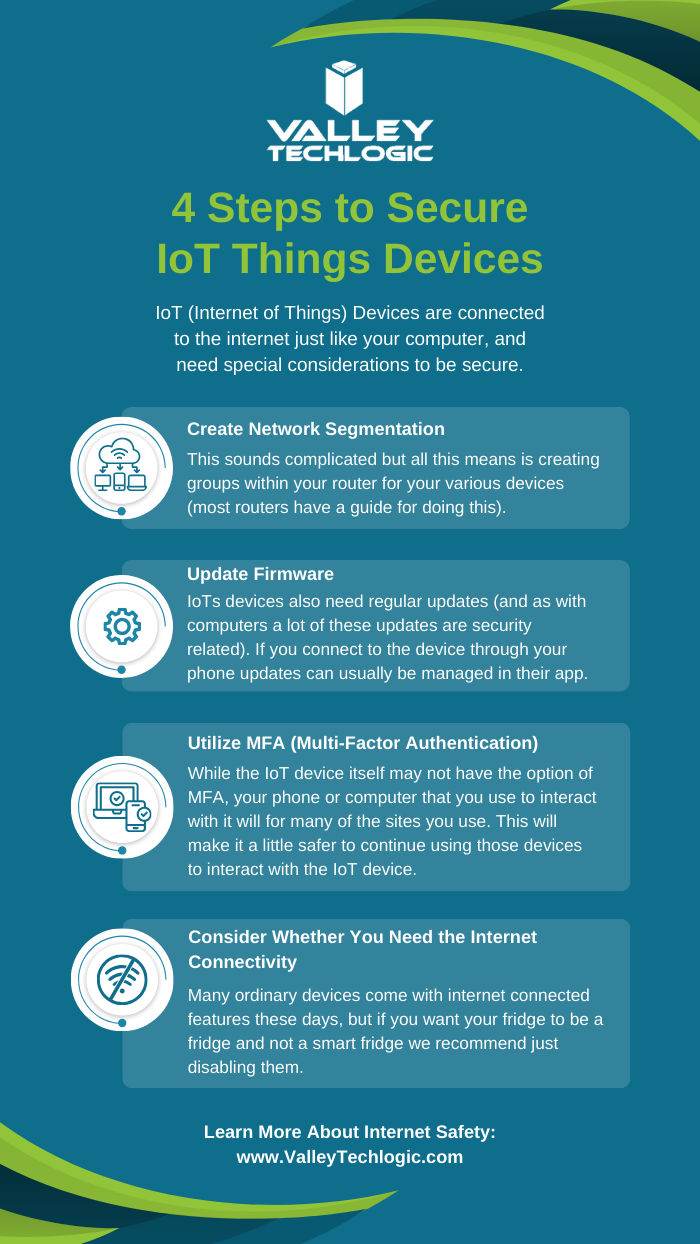
    That is, unless you follow these steps when securing your network and IoT devices.

    On top of these simple steps to secure your network and maintain your devices, you can also work with a provider like Valley Techlogic.

    We utilize best in class tools that prevent cyber attacks from occurring in the first place. Our partners have the resources to stay on top of and mitigate threats (even zero-day attacks) and with ongoing maintenance included in our service plans we can prevent your devices from becoming a threat vector to you or to another business.

    Schedule a meeting with us today to learn more.

    Looking for more to read? We suggest these other articles from our site.

    This article was powered by Valley Techlogic, an IT service provider in Atwater, CA. You can find more information at https://www.valleytechlogic.com/ or on Facebook at https://www.facebook.com/valleytechlogic/ . Follow us on Twitter at https://x.com/valleytechlogic.

  • 7 Gadgets you shouldn’t leave home without this Holiday Season

    7 Gadgets you shouldn’t leave home without this Holiday Season

    The holidays are truly upon us and for many of us that means traveling to friends and family and enjoying some time spent away from work and in our loved one’s company.

    However, for business owners being on the go doesn’t mean the work stops and we often carry our work devices with us to keep a watchful eye on things even from afar. We have 7 gadget recommendations that can facilitate working on the go or keeping in touch with those you’ve left in charge as you try to unwind a bit this holiday season.

    Our 7 tech gadget recommendations will make traveling with your tech easier on the go.

    1. Luggage trackers: The first step is making sure your tech makes it to your target destination, and luggage trackers will help you keep track of your belongings while you’re on the go. We recommend Tile Pro for Android users and AirTags for Apple. These trackers use Bluetooth to communicate to other devices in the area and will pinpoint the location of your luggage should you lose track of it. Our Recommendation: Airtag and Tile Pro.
    2. Battery banks: Another way to make working on the go easier is having additional battery power at your fingertips, battery banks are inexpensive and can power multiple devices simultaneously. Our Recommendation: Anker Magnetic Battery 5,000 mAH
    3. Portable monitors: Portable monitors have come a long way, for $200 or less you can get a decent secondary monitor that will make working away from your home office much more convenient. Our Recommendation: UPERFECT Portable Monitor
    4. Cord organizing case: We have all pulled out a knot of cables we then have to untangle before we can begin charging our travel depleted devices, there is a better way. Our Recommendation: MATEIN Cable Organizer Bag
    5. Laptop stand: In another effort to bring the comforts of home with you we recommend a good quality laptop stand that will make working on whatever open surface you can find much more pleasant. Our Recommendation: OMOTON Ergonomic Laptop Riser
    6. Privacy screen: If you’re planning to work in any public spaces this holiday season you might want to consider a privacy screen, this will make it so passersby’s can’t take a peek at what you’re doing and most of them reduce blue light as well. Our Recommendation: Acer 2-Way Privacy Filter
    7. Portable door lock: If your travel plans involve a hotel or shared AirBNB we recommend adding additional protection with a portable door lock. This will keep out unexpected and uninvited guests and leave any belongings you might have in your room (such as your laptop) more protected. Our Recommendation: Winchy Portable Door Lock

    Tech advice like this is just one of the services we provide to our customers, and right now we’re offering $100 just for meeting with us and hearing about our services. Time is running out on this offer, click this link or on the image below to get started.

    Looking for more to read? We suggest these other articles from our site.

    This article was powered by Valley Techlogic, an IT service provider in Atwater, CA. You can find more information at https://www.valleytechlogic.com/ or on Facebook at https://www.facebook.com/valleytechlogic/ . Follow us on Twitter at https://x.com/valleytechlogic.

  • Leave the World Behind features alleged cyber warfare as the main movie villain, how realistic was it?

    Leave the World Behind features alleged cyber warfare as the main movie villain, how realistic was it?

    The cyber attacks we typically report on are localized or contained to a specific sector or even business entity.

    In Netflix’s new movie “Leave the World Behind” characters are confronted with what looked like a global cyber attack causing mass destruction and chaos, including self-driving cars crashing into each other with no driver present and planes crashing into the ocean into land with GPS absent.

    The movie features an all-star cast and is the first movie we’ve seen take on the apocalypse narrative with a unique technology twist – not to besmirch the Terminator legacy, but killer robots are found fairly frequently in pop culture.

    Originally adapted from Rumaan Alam’s book of the same name, the movie actually takes liberty in specifically calling out the cyber attack in the movie where in the book the nature of what’s going on is left a lot more ambiguous.

    The movie even received feedback from former President Barack Obama to make sure the cyber warfare elements were realistic instead of fantastic which left us with an eerie feeling after viewing the film, because the truth is some of the elements of it could be replicated in real life.

    Venturing into spoiler territory now, at several points in the movie the characters are subjected to an ear-piercing noise that stops them in their tracks. It’s alluded to that these attacks might be “sonic booms” and are the reason one of the characters begins having physical symptoms as a response (odontophobia folks beware). This attack in the movie mirrored an alleged event in Cuba where directed energy waves, in this case microwave instead of sound, caused physical harm to locals.

    In another scene one of the main characters attempts to check her phone for news and is instead confronted with several news articles, seemingly normal messages at first then devolving on red paper are dropped from a drone in the sky on a character driving down an empty road – this is several hours after the characters have been cut off from the outside world by the technology we all rely on for news and information.

    By sheer coincidence these scenes are again mirrored by a real-life news event that happened just this month, where Iran-located hackers took over a water authority in Pennsylvania because their devices were Iran made, screens of these electronics found in the facility displayed a message in red with “YOU HAVE BEEN HACKED” featured prominently.

    It’s unlikely that an attack could take out an entire nation easily, but it is worrying for us as a technology provider when we encounter lackadaisical responses to very serious cyber threats. The whole world does not need to be hacked for a hack to affect your whole world.

    If after watching this new blockbuster you’re thinking it might be time to evaluate your cyber preparedness, Valley Techlogic has you covered.

    If you book a consultation with us this month you will even receive a $100 cash for your time just for hearing us out. Click here or on the image below to get started.


    Looking for more to read? We suggest these other articles from our site.

    This article was powered by Valley Techlogic, an IT service provider in Atwater, CA. You can find more information at https://www.valleytechlogic.com/ or on Facebook at https://www.facebook.com/valleytechlogic/ . Follow us on Twitter at https://x.com/valleytechlogic.

  • 5 emerging cyber threats to worry about in 2024

    5 emerging cyber threats to worry about in 2024

    We’re all familiar with the usual suspects when it comes to cyber threats, viruses, trojan horses, phishing attacks, malware and ransomware. We’ve covered these threats in great detail (here’s just a few articles on these topics: 10 scary cybersecurity statistics business owners need to know,  Zero trust or zero effort, how does your businesses security stack measure up?, Can you spot the phishing clues? And 10 tips to avoid falling for a phishing scam). Even if you’re not a technical inclined person you probably have some awareness of how to avoid these threats, such as being careful with suspicious emails and attachments or not downloading files from unknown sources.

    What about emerging cyber security threats? These are threats that are not well known and in fact may use improvements in technology such as AI (artificial intelligence) to their advantage for nefarious gain.

    Bad actors are continuously looking for new ways to subjugate your devices and gain access to your systems and data to exploit it for their own gain, and unfortunately in 2024 we don’t believe things will be any different.

    Knowledge is power, so by being aware of these emerging threats you can learn to avoid them or learn what protections you need to put in place to prevent yourself and your business from becoming a victim.

    Here are five emerging threats that we believe will grow in popularity in 2024:

    1. Supply Chain Attacks: Cyber criminals have learned targeting vulnerable systems that supply the things we need day to day (for example the Colonial Pipeline attack that occurred in 2021) can result in lucrative payouts as the vendor(s) scramble to get things back up and running again. We’re expecting these types of attacks to continue to increase in 2024.bio
    2. Biometric Data Threats: As more biometric data is used to confirm your identity for accessing your accounts or making payments, more regulations need to be put in place to protect that data. Facial recognition and fingerprint scans can often give someone access to your personal devices (such as a cellphone) and those devices can be the keys to the kingdom when it comes to accessing your accounts. Attacks in 2024 may escalate not just to the theft of data but also physical theft in unison on high value targets (think CEOs, Presidents and other C-Suite users).
    3. Artificial Intelligence (AI) Manipulation: As more and more people explore using AI in their business or to provide solutions to common problems, there will be more and more bad actors trying to exploit it. We’ll see increased attacks using AI including data manipulation (feeding AI erroneous results so that users are receiving incorrect information) and attacks on systems using AI or powered by AI.
    4. 5G Network Vulnerabilities: As 4G continues to be phased out and 5G becomes more common place we’ll see increased attacks aimed at these networks, especially as more and more businesses in rural locations utilize 5G as a solution to spotty or absent cable or fiber options in their area. As the nature of 5G is aimed at providing a geographically robust internet solution to companies like these it’s important to make sure your security settings are beyond reproach to inhibit attacks on your network from the outside.
    5. Advanced Ransomware & Phishing Attacks: Ransomware and phishing attacks are not new, but they continue to grow more sophisticated as as-a-service models continue to roll out, this allows attackers that may not have a firm grasp of technology or even English to send out widespread attack emails that are indistinguishable from emails you may get from reputable services you use for a relatively small monetary fee. Also, because many of these attacks originate outside the US you may have no recourse if your business is successfully hit by one.

    These are just five emerging threats but there are many threats out there making it all the more crucial you have a cyber security solution behind your business that’s staying ahead of these threats and more.

    The threats mentioned above are crimes of opportunity and it’s very easy to be caught in the wide net that’s being cast by those with ill intentions. Valley Techlogic has been at the forefront of providing all encompassing security solutions to our customers. If you would like to learn more about protection your business from cyber security attacks in 2024 schedule a consultation with our experts today. Also for a limited time when you hear us out, you can also take advantage of our Black Friday offer.

    Looking for more to read? We suggest these other articles from our site.

    This article was powered by Valley Techlogic, an IT service provider in Atwater, CA. You can find more information at https://www.valleytechlogic.com/ or on Facebook at https://www.facebook.com/valleytechlogic/ . Follow us on Twitter at https://x.com/valleytechlogic.

  • Inclement weather, solar flares, earthquakes – how disaster proof is your businesses technology?

    Inclement weather, solar flares, earthquakes – how disaster proof is your businesses technology?

    We’ve written quite a bit about cyber security disasters and disaster recovery in that context (here are just a couple options Why every business needs a documented backup and disaster recovery strategy and Data Breached? 5 ways to reduce the impact on your business), but what about a disaster that’s truly out of your hands?

    Depending on where you live there are different types of types of disasters to worry about, and some disasters such as solar flares or geomagnetic storms are a global concern.

    While it’s been hyped by certain news outlets that a solar storm of spectacular magnitude could wipe out our global network and cause nationwide blackouts, solar events of the level required to cause mass destruction are spectacularly rare. Nasa rates solar flare levels on a scale that includes B Class which is the smallest, through C, M and X class which is the biggest. Within each scale there is a rating from 1-9 for the first three levels of solar flares and X class flares can be rated up to 17.

    X-class flares actually occur fairly frequently, with there being 11 so far in 2023 at the time of writing. These flares are strong enough to disrupt satellite signals or deliver a minor dose of radiation to passengers on an airplane when they occur.

    The best defense against solar events such as these is to advocate for improving our electricity grids, above ground electricity components are the most vulnerable if a significant solar flare were to occur. We do want to stress again though that an event of that nature would be exceedingly rare.

    Let’s now take a look at events that are much more common, such as inclement weather or for California based businesses such as ours, earthquakes.

    While you most likely have insurance that would cover your physical property including your office building, hardware and office furniture, it might be important to ask your insurance broker if it will also cover intangible assets.

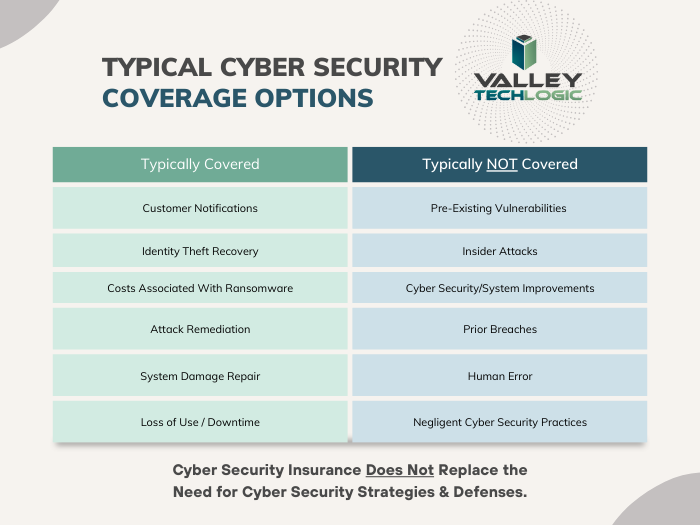
    It is likely you’ll need a cyber liability policy to provide coverage for your data, below is a chart for what we typically see is covered (and not covered) by cyber liability coverage.

    As you can see most cyber liability policies cover business interruptions and data loss even if the cause is not cyber security related. What’s often not covered is events that fall within your control (such as the human element we’re always mentioning when it comes to common hacking techniques such as phishing).

    Another good way to protect your data from disaster events that may impact your business is to have most of your data located off premises in the cloud.

    While the cloud is often construed as a nebulous concept, really hosting your data in the cloud just means it’s on a server somewhere else. If your on-premises server is subject to catastrophic system failure for any reason, the cloud copy of your data would be safe.

    There are many low cost or free cloud options you can take advantage of for your data, we have a guide to the best way to use the free OneDrive storage that comes with your Microsoft 365 subscription here.

    Also, if you work with a managed IT provider such as Valley Techlogic, backups and backup maintenance is often included as part of your service plan. We have information about our own back program, TechVault.

    If disaster proofing your business in 2024 is on your to-do list, why not collaborate with us? We have experience in creating plans for businesses to make sure we avoid all preventable downtime and to protect your data from catastrophic events. If you’ve already suffered a data breach or other system outage and need assistance in data recovery that is also a service Valley Techlogic can provide. Reach out today for more information.

    Looking for more to read? We suggest these other articles from our site.

    This article was powered by Valley Techlogic, an IT service provider in Atwater, CA. You can find more information at https://www.valleytechlogic.com/ or on Facebook at https://www.facebook.com/valleytechlogic/ . Follow us on Twitter at https://x.com/valleytechlogic.